
The Ultimate Beginner’s Guide to Caring for an Indoor Pet Rabbit
Why Do So Many New Rabbit Owners Feel Overwhelmed Within the First Week?

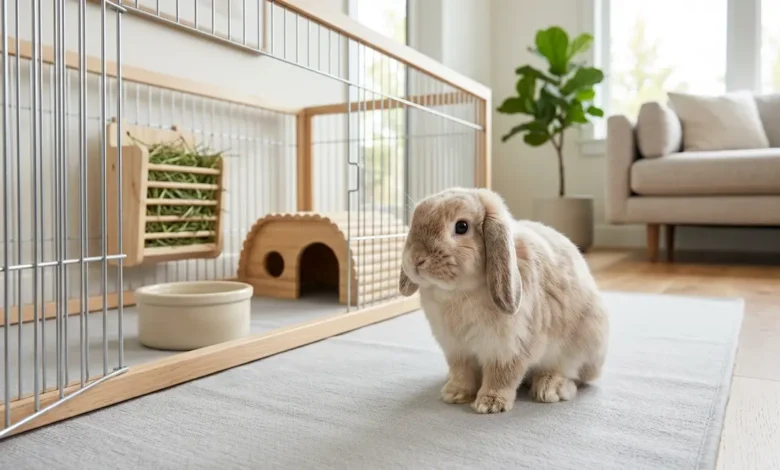
Indoor pet rabbit care encompasses every aspect of keeping a domestic rabbit healthy and thriving inside a home, including proper housing beyond traditional cages, a fiber-rich diet anchored by unlimited Timothy hay, litter training, behavioral understanding, exotic veterinary attention, and daily mental enrichment. When executed correctly, a well-cared-for house rabbit can live between 8 and 12 years, forming deep emotional bonds with its human family comparable to those of dogs or cats.
Have you ever brought home a fluffy bunny from a rescue shelter or pet store, only to realize within 48 hours that you have absolutely no idea what you are doing? Maybe the rabbit refuses to eat those colorful pellets you bought. Perhaps it keeps thumping at three in the morning, and you genuinely cannot figure out whether it is terrified, angry, or just being dramatic. You are not alone. Thousands of first-time rabbit owners across the United States, the United Kingdom, and Australia share that exact confusion every single year. The uncomfortable truth is that rabbits are the most misunderstood companion animals in the Western world, and most of the “care advice” circulating online is dangerously outdated. The information ahead will change that for you, permanently. It is built on modern veterinary science, real behavioral research, and the kind of practical detail that separates a rabbit who merely survives from one who genuinely thrives in your living room.
Here is a scenario that plays out in homes every weekend. A family adopts a Holland Lop from a local rescue. They set up a wire-bottom cage in the corner of the den, fill a bowl with a rainbow-colored pellet mix from the pet store, and toss in a water bottle. Within a month, the rabbit has sore hocks from the wire floor, dental issues from sugary pellets, and it grunts every time someone reaches into the cage because it feels trapped and territorial. Then the family concludes that rabbits “just aren’t friendly pets.” The rabbit was never the problem. The setup was. If that family had instead used an exercise pen on a flat surface, offered unlimited Timothy hay, and given the rabbit a few hours of supervised free-roam time each evening, they would have witnessed binkies, nose nudges, and a curious little creature following them from room to room like a shadow. That transformation is exactly what you will learn to create.
- Replace any wire-bottom cage with an exercise pen (X-pen) on a solid surface — minimum 12 sq ft for one rabbit.
- Feed 80% unlimited Timothy hay, 10% fresh leafy greens, 10% plain timothy-based pellets. Discard colorful pellet mixes immediately.
- Place hay directly inside the litter box. Rabbits eat and poop simultaneously — this achieves near-perfect litter training within weeks.
- Find an exotic animal veterinarian before any emergency — standard dog/cat vets often lack rabbit-specific training.
- Spay or neuter between 4–6 months. Unspayed females face 60–80% uterine cancer rates by age 5.
- Rabbit-proof all rooms: encase cords in split loom tubing, block gaps behind furniture, protect baseboards.
- Brush weekly; daily during heavy sheds. Never bathe a rabbit in water.
- GI stasis kills within 24–48 hours. If your rabbit stops eating, stops producing droppings, or sits hunched and lethargic — rush to an exotic vet immediately. Rabbits treated within 12 hours have an 85%+ survival rate; after 24 hours, survival drops below 40%.
- Never use clumping clay litter or cedar shavings — both cause fatal internal damage.
Why Are Indoor House Rabbits Replacing the Outdoor Hutch Model?
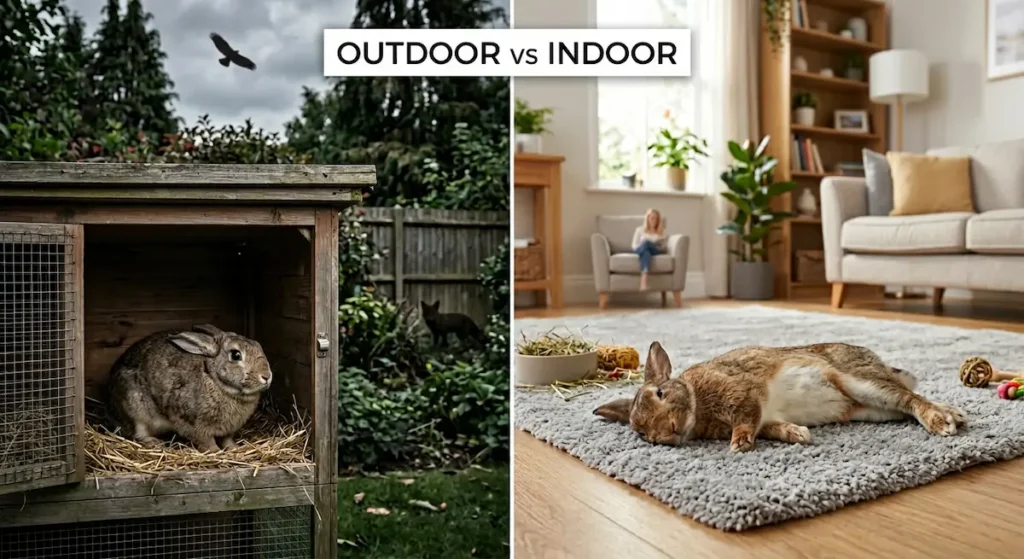
The image of a rabbit living in a wooden hutch in the backyard is fading rapidly, and for excellent reason. Outdoor rabbits face predator stress from foxes, hawks, raccoons, and neighborhood cats. Even if a predator never physically touches the rabbit, the sheer proximity can cause fatal cardiac arrest from fear. A 2019 study published in the journal Veterinary Record documented multiple cases where rabbits died from myocardial failure triggered by predator-induced stress, without any direct physical contact occurring (Rooney et al., 2019). That statistic alone should give any prospective owner pause.
Indoor rabbits, conversely, live longer, healthier, and significantly more social lives. The House Rabbit Society, the largest rabbit welfare organization in the United States, reports that indoor rabbits frequently reach 10 to 12 years of age, while outdoor hutch rabbits rarely surpass 5 to 7 years under average owner care. The difference is not genetics. It is environment, diet, veterinary access, and daily interaction.
Rabbits are extraordinarily intelligent. They can learn their names, come when called, navigate obstacle courses, and even differentiate between individual human family members. Their social intelligence rivals that of many dog breeds. When you keep a rabbit indoors, you invite that intelligence into your daily life. The rabbit becomes a true companion rather than a forgotten animal in the yard.
How Should You Prepare Your Home for a Free-Roam Rabbit?
Is It Time to Ditch the Cage Entirely?
Walk into almost any chain pet store and you will see small wire cages marketed specifically for rabbits. Most of these cages measure roughly 24 by 36 inches. Now consider that a medium-sized rabbit like a Dutch or Mini Rex needs, at minimum, four times its own body length in living space just for a resting area, according to the UK’s Royal Society for the Prevention of Cruelty to Animals (RSPCA). Those pet store cages do not even come close.
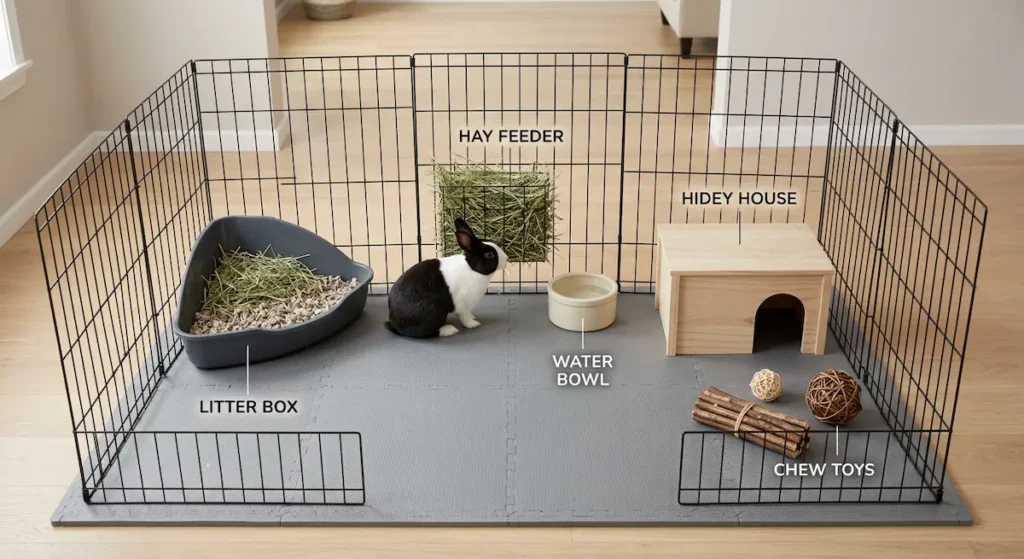
The gold standard for a beginner’s indoor rabbit setup involves an exercise pen, commonly called an X-pen. These are the same metal panel enclosures used for puppies, typically 36 to 48 inches tall and configurable into various shapes. Place the X-pen on a washable rug or foam floor tiles to protect your flooring and give the rabbit traction. Inside the pen, include a litter box, a hay feeder, a water bowl (not a bottle, as bowls encourage more natural and higher water intake), a hidey house, and a few chew toys.
Many experienced owners eventually transition to full free-roam living, where the rabbit has access to one or more rooms of the house around the clock. This approach works beautifully once the rabbit is fully litter trained and the space is thoroughly rabbit-proofed. Think of the X-pen as training wheels. It provides a safe home base during the first few weeks while trust and habits develop.
How Do You Rabbit-Proof a Room Full of Cables and Furniture?
Rabbits chew. That is not a behavioral flaw; it is a biological imperative. Their teeth grow continuously at a rate of approximately 2 millimeters per week, and chewing fibrous materials keeps those teeth filed to a safe length. The problem arises when a rabbit applies that instinct to your iPhone charger, your laptop cord, or the electrical wiring behind your television.
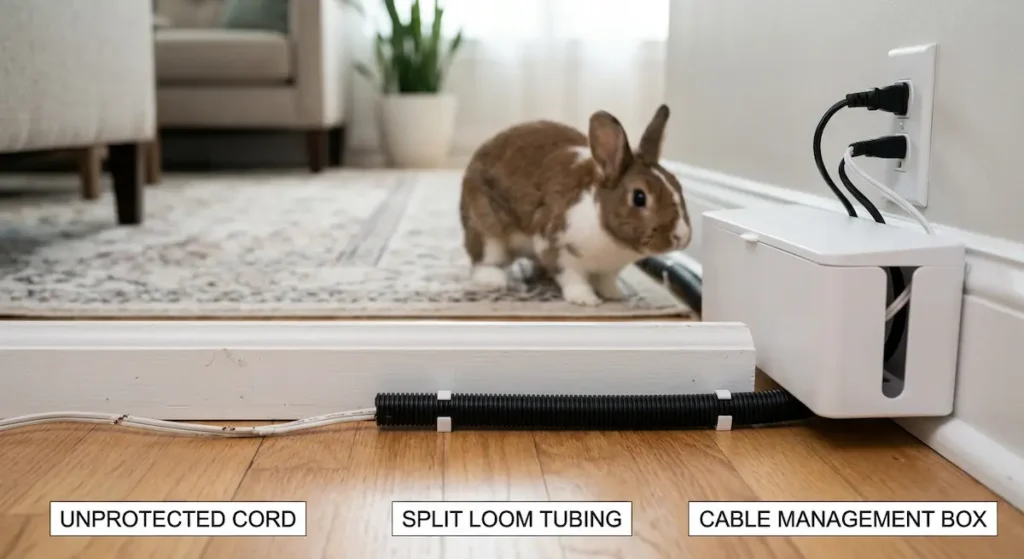
Here is the definitive approach to rabbit-proofing a room. Start with electrical cords. Purchase split loom tubing (available at any hardware store or online) and encase every accessible cord. Split loom tubing is a corrugated plastic sleeve that you can cut to length and snap around cables. It is far more durable than the thin plastic spiral wraps sold in pet stores, which a determined rabbit can shred in minutes. For areas with dense cable clusters, such as behind entertainment centers, use cable management boxes to completely enclose the connections.
Baseboards are the second target. Rabbits love to chew wooden baseboards, especially in corners. You can protect them with clear acrylic panels or NIC (Neat Idea Cube) grid panels zip-tied along the wall. Some owners use bitter apple spray as a deterrent, but results vary wildly; some rabbits actually enjoy the taste.
Finally, block access to tight spaces behind couches, refrigerators, and bookshelves. Rabbits can squeeze into surprisingly narrow gaps and may chew on hidden wires or ingest dust and debris. Use foam pool noodles, storage bins, or NIC panels to seal those gaps. Ensuring a thorough approach to rabbit-proofing means understanding that a determined bunny will test every barrier you create, usually within the first 72 hours.
What Exactly Should an Indoor Rabbit Eat Every Day?
| Food Category | % of Daily Diet | Recommended Types | Serving Guideline | Key Health Function |
|---|---|---|---|---|
| Grass Hay | ~80% | Timothy hay, Orchard grass, Meadow hay (Alfalfa for rabbits under 7 months only) | Unlimited — replenish multiple times daily | Dental wear, GI motility, fiber intake |
| Fresh Leafy Greens | ~10% | Romaine, cilantro, parsley, bok choy, dandelion greens, watercress, basil | 1 packed cup per 2 lbs of body weight daily | Hydration, vitamins, mineral diversity |
| Pellets | ~10% | Plain timothy-based pellets only (no colorful mix-ins, seeds, or yogurt drops) | 1/4 cup per 5 lbs of body weight daily | Concentrated nutrition, balanced minerals |
| Treats (Fruit) | <1% | Banana, apple (no seeds), strawberry, blueberry, raspberry | 1–2 tablespoons max, 1–2 times daily | Enrichment and bonding only — no nutritional necessity |
| Water | Essential | Fresh, clean water in a heavy ceramic bowl (bowls preferred over bottles) | Unlimited — refresh at least twice daily | Hydration, kidney function, GI stasis prevention |
| Source: House Rabbit Society – Rabbit Diet Guidelines & Prebble et al. (2020), Journal of Animal Physiology and Animal Nutrition | ||||
Why Is Unlimited Hay the Single Most Important Factor?
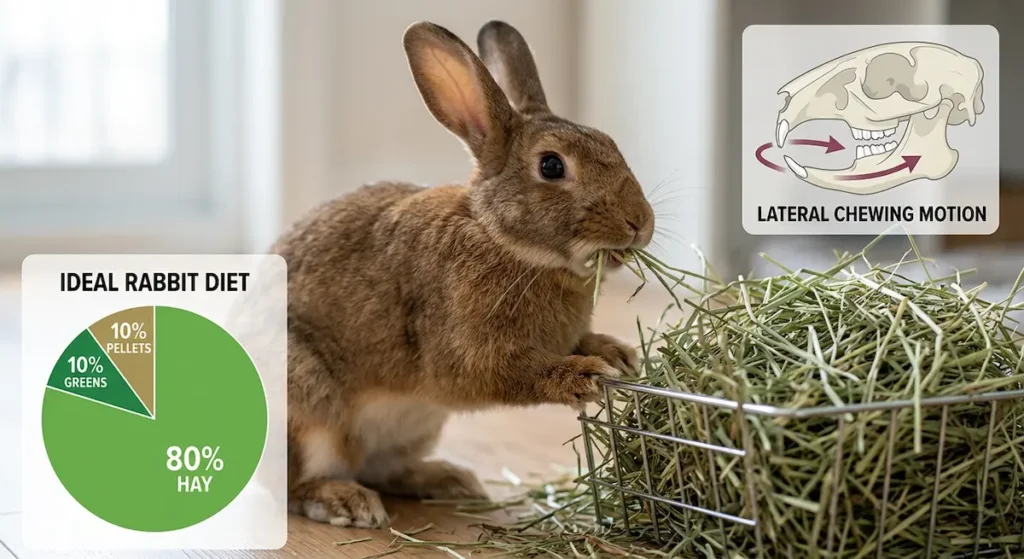
If you remember only one thing from this entire article, let it be this: hay is not a supplement for rabbits. It is the overwhelming foundation of their entire diet. Approximately 80% of what a healthy rabbit consumes daily should consist of long-stem grass hay, primarily Timothy hay or Orchard grass hay. This is not a rough estimate or a casual suggestion. It is a veterinary consensus supported by decades of clinical evidence.
So why is hay so critical? Two reasons dominate. First, dental health. As noted above, rabbit teeth grow continuously. The lateral chewing motion required to grind long-stem hay naturally files the teeth and prevents the deadly overgrowth that leads to malocclusion, abscesses, and starvation. Second, gastrointestinal motility. A rabbit’s digestive system is designed to process enormous quantities of fiber. Without it, the gut literally stops moving, a condition called gastrointestinal stasis, which will be discussed in extensive detail later in this article because it is one of the most dangerous emergencies any rabbit owner can face.
A 2020 study published in the Journal of Animal Physiology and Animal Nutrition confirmed that rabbits fed predominantly hay-based diets exhibited significantly lower rates of dental disease, obesity, and gastrointestinal disorders compared to rabbits fed pellet-heavy diets (Prebble et al., 2020). The data was unambiguous. Hay saves lives.
Timothy hay suits most adult rabbits perfectly. Orchard grass is an excellent alternative for owners or family members with Timothy hay allergies, as it produces less dust. Young rabbits under 7 months can eat Alfalfa hay, which is higher in calcium and protein to support rapid growth, but adult rabbits should avoid Alfalfa because the excess calcium can contribute to bladder sludge and urinary stones.
Which Fresh Greens and Vegetables Are Safe, and Which Are Dangerous?

Fresh leafy greens should constitute roughly 10% of the diet. Aim for approximately one packed cup of greens per two pounds of body weight daily. Variety matters, so rotate through different options to ensure a broad nutritional profile.
Here is a categorized breakdown:
- Daily-safe greens: Romaine lettuce, cilantro, parsley, spring mix (mesclun), bok choy, carrot tops, dandelion greens, endive, watercress, and basil.
- Feed sparingly (high in oxalates or calcium): Spinach, kale, Swiss chard, mustard greens. Limit these to two or three times per week.
- Avoid entirely: Iceberg lettuce (contains lactucarium, which can cause diarrhea and has virtually no nutritional value), rhubarb, raw potatoes, onions, garlic, leeks, and avocado.
Introduce any new vegetable slowly, one at a time, over a week. Watch the rabbit’s droppings closely. If stools become soft or loose, remove that vegetable from the rotation. Every rabbit’s digestive system is slightly different, and what one bunny handles perfectly might cause another to develop cecal dysbiosis.
| Category | Foods Included | Frequency | Important Notes |
|---|---|---|---|
| ✅ Safe Daily Greens | Romaine lettuce, cilantro, parsley, bok choy, carrot tops, dandelion greens, endive, watercress, basil, spring mix (mesclun) | Daily | Rotate at least 3 types daily for nutritional variety. Wash thoroughly before serving. |
| ⚠️ Feed Sparingly | Spinach, kale, Swiss chard, mustard greens, collard greens | 2–3 times per week | High in oxalates or calcium. Excessive feeding can cause bladder sludge or kidney issues. |
| 🍇 Safe Treats (Fruit) | Banana, apple (no seeds), strawberry, blueberry, raspberry, pear, melon | 1–2 tbsp, 1–2x daily | High sugar content. Use strictly as rewards or bonding treats, never as staple food. |
| ❌ Toxic — Never Feed | Avocado, chocolate, iceberg lettuce, rhubarb, raw potatoes, onions, garlic, leeks, seeds/pits, cookies, bread, pasta, cereal | NEVER | Can cause fatal toxicity, GI blockage, liver failure, or cardiovascular collapse. Seek emergency vet care if ingested. |
| ❌ Unsafe Pellet Types | Colorful muesli-style mixes with dried corn, seeds, yogurt drops, puffed grains | NEVER | Causes selective feeding, obesity, dental disease, and fatty liver. Use plain timothy-based pellets only. |
| Sources: House Rabbit Society – Suggested Vegetables & Fruits & ASPCA – Toxic & Non-Toxic Foods | |||
How Much Pellet Food Does an Indoor Rabbit Actually Need?
The remaining 10% of the diet consists of plain, timothy-based pellets. Emphasis on plain. Those brightly colored pellet mixes containing dried corn, seeds, yogurt drops, and cereal pieces are essentially junk food for rabbits. They lead to selective feeding, where the rabbit picks out the sugary bits and ignores the nutritious pellets, resulting in malnutrition and obesity.
Purchase pellets that list Timothy hay as the first ingredient, with no added sugars, artificial colors, or seed mix-ins. Brands like Oxbow Essentials and Sherwood Forest are widely recommended by exotic veterinarians across the US and UK. For an average 5-pound adult rabbit, offer roughly one-quarter cup of pellets per day. That amount will seem shockingly small to new owners accustomed to filling a bowl, but it is clinically appropriate. Pellets are a concentrated food. Overfeeding them is one of the fastest routes to obesity and hepatic lipidosis (fatty liver disease) in rabbits.
Treats deserve their own mention. Safe treats include small pieces of banana (a one-inch slice), apple (no seeds, as apple seeds contain cyanide compounds), strawberry, blueberry, and raspberry. Offer treats no more than once or twice daily, in tiny portions. Rabbits have an intense sweet tooth and will happily eat fruit until they develop serious digestive upset, so portion control falls squarely on you.
Can You Really Litter Train an Indoor Bunny With Near-Perfect Results?
What Litter Box and Substrate Should You Use?
Absolutely, you can litter train a rabbit, and with far less effort than most people expect. Rabbits are naturally tidy animals who prefer to eliminate in one or two consistent spots. Your job is simply to identify those spots and place a litter box there.
Use a large, uncovered cat litter box. Avoid enclosed or hooded boxes, as rabbits dislike feeling trapped while they eat and eliminate. For substrate, choose paper-based litter (such as Carefresh or Yesterday’s News) or kiln-dried pine pellets (not shavings; the kiln-drying process removes the phenols that make raw softwood dangerous). Never use clumping clay cat litter. Rabbits ingest small amounts of their litter while eating hay, and clumping clay can cause fatal intestinal blockages. Cedar shavings are equally dangerous due to toxic aromatic compounds that damage the liver and respiratory system.
| Litter Type | Safety Rating | Examples / Brands | Notes |
|---|---|---|---|
| Paper-Based Litter | ✅ Safe | Carefresh, Yesterday’s News, Small Pet Select | Highly absorbent, dust-free, safe if ingested in small amounts. Widely recommended by exotic vets. |
| Kiln-Dried Pine Pellets | ✅ Safe | Equine pine pellets, Feline Pine (original) | Kiln-drying removes harmful phenols. Very economical. Not to be confused with raw pine shavings. |
| Hay (as litter layer) | ✅ Safe | Any grass hay (Timothy, Orchard) | Place hay on top of another absorbent litter. Encourages eating and litter training simultaneously. |
| Clumping Clay Cat Litter | ❌ Dangerous | All clumping clay brands | Causes fatal intestinal blockages when ingested. Produces harmful dust that damages respiratory tract. |
| Cedar Shavings | ❌ Dangerous | All cedar products | Contains toxic aromatic phenols (plicatic acid) that cause liver damage and respiratory illness. |
| Raw Pine/Softwood Shavings | ❌ Dangerous | Non-kiln-dried pine or spruce shavings | Contains phenols that are not removed without kiln-drying. Can cause hepatotoxicity over time. |
| Corn Cob Litter | ⚠️ Risky | Various brands | Can mold quickly when wet. If ingested in large amounts, may cause intestinal impaction. Generally not recommended. |
| Sources: House Rabbit Society – Litter Training FAQ & ASPCA – General Rabbit Care | |||
What Is the “Hay-in-the-Box” Method and Why Does It Work So Well?
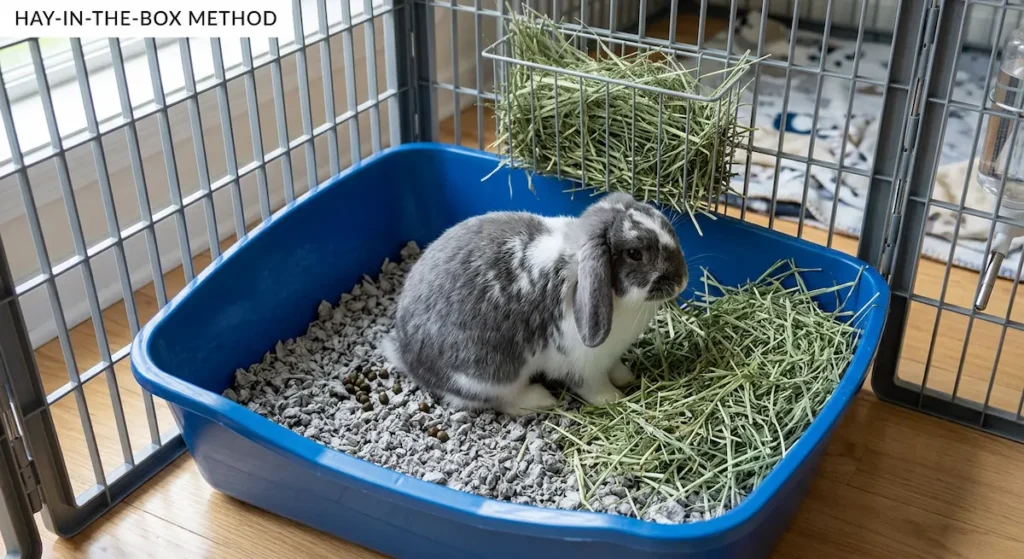
This single behavioral hack will transform your litter training success rate from frustrating to nearly flawless. Rabbits eat and defecate simultaneously. It is a prey-animal survival behavior — they graze while staying in one spot to maintain alertness. By placing a generous pile of fresh hay directly inside the litter box, or in a hay rack mounted immediately above it, you create an irresistible reason for the rabbit to sit in the box for extended periods. While it eats, it naturally deposits droppings right where you want them.
Most rabbits, especially spayed or neutered ones, achieve reliable litter habits within one to three weeks using this method. Unaltered rabbits, particularly males, may continue to scatter territorial droppings and spray urine. This is one of many reasons why spaying and neutering is strongly recommended, which brings us to the health section ahead.
What Is Your Rabbit Trying to Tell You Through Its Body Language?
| Behavior | Mood Category | What It Looks Like | What It Means | Owner Response |
|---|---|---|---|---|
| Binky | 💚 Happy | Spontaneous leap into the air with a body twist and head flick | Pure joy and excitement. Sign of a healthy, content rabbit. | Enjoy the show. You are doing an excellent job. |
| Zoomies | 💚 Happy | Full-speed sprinting in laps around the room | Excess energy release and playfulness. | Ensure the space is safe for running (no slippery floors). |
| Flopping | 💚 Relaxed | Suddenly drops onto its side, appears motionless | Complete relaxation and trust. The rabbit feels fully safe. | Do not panic. This is normal and positive. Observe for breathing. |
| Tooth Purring | 💚 Content | Soft, gentle grinding of teeth while being petted | Equivalent to a cat’s purr. Deep comfort. | Continue petting. You have found the sweet spot. |
| Thumping | 🟡 Alert / Annoyed | Slamming one or both hind feet against the ground | Warning signal: danger, annoyance, or disapproval. | Check for sources of stress. Speak softly and calmly. |
| Lunging / Hard Biting | 🔴 Aggressive / Fearful | Lunging forward with teeth bared, hard bite | Territorial aggression or fear. Common in unspayed/unneutered rabbits. | Do not punish. Let the rabbit come to you. Consider spay/neuter. |
| Loud Tooth Grinding | 🔴 Pain | Loud, sharp, audible grinding (distinct from soft purring) | The rabbit is in significant pain. | Contact your exotic vet immediately. |
| Hunched Posture + Not Eating | 🔴 Emergency | Sitting hunched, refusing food, not producing droppings | Possible GI stasis — a life-threatening emergency. | Rush to an exotic vet. Do not wait. |
| Sources: House Rabbit Society – Interpreting Body Language & McBride, A. (2019). Why Does My Rabbit…? Souvenir Press. | ||||
What on Earth Is a Binky, and Should You Be Worried About Flopping?
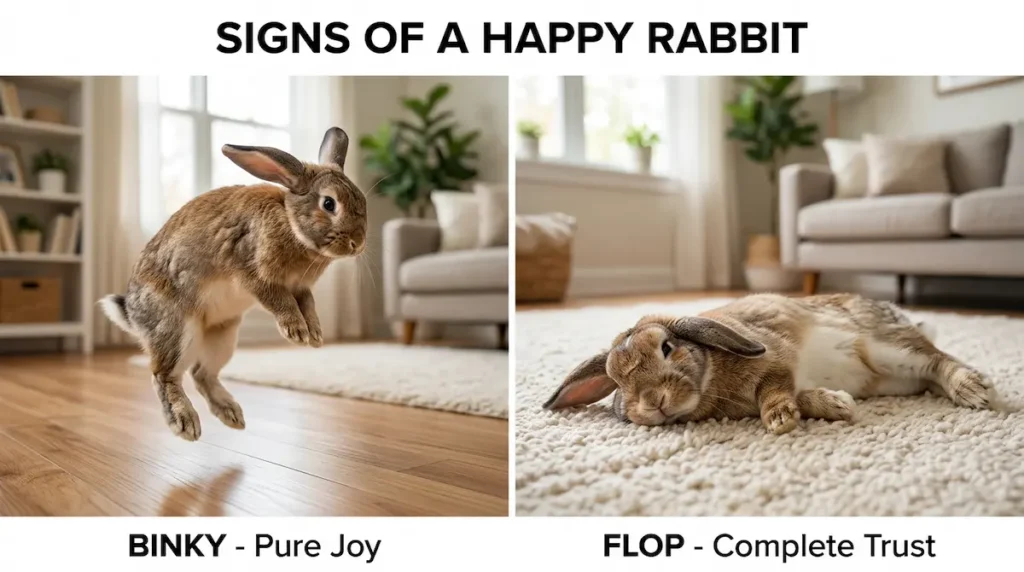
Understanding rabbit body language and behavior is one of the most rewarding parts of living with a house bunny. Rabbits communicate almost entirely through posture, movement, and subtle ear positioning. They rarely vocalize, so if you are waiting for barking or meowing-level signals, you will miss everything.
A binky is pure joy made physical. It is a spontaneous, acrobatic leap into the air, often accompanied by a dramatic twist of the body and a flick of the head. Rabbits binky when they feel safe, happy, and energized. If your rabbit binkies in your presence, you have earned its trust. Closely related are zoomies, where the rabbit sprints at full speed around the room in laps, sometimes bouncing off furniture. Both behaviors indicate a rabbit that feels genuinely content in its environment.
Flopping is perhaps the most startling behavior for new owners. A rabbit will suddenly drop onto its side, sometimes so dramatically and suddenly that owners rush over in panic thinking the animal has died. On the contrary, flopping is one of the highest compliments a rabbit can pay you. It means the rabbit is so relaxed and comfortable that it has completely let its guard down, an extraordinary act for a prey animal whose survival depends on constant vigilance.
Why Does Your Rabbit Thump, and What Does a Nip Actually Mean?
Thumping is a warning signal. When a rabbit slams its hind leg against the ground, it is communicating alarm, annoyance, or disapproval. In the wild, thumping warns other rabbits of approaching predators. Indoors, your rabbit might thump because it heard an unfamiliar sound, saw a shadow that spooked it, or simply because you rearranged the furniture and it does not appreciate the change. Rabbits are creatures of habit and can be remarkably opinionated about their environment.
Nipping falls into two categories. A gentle nip or tooth-purr against your hand is often a grooming behavior or a request for attention. A harder bite, however, typically signals territorial aggression or fear. Unspayed females are particularly prone to territorial biting, especially around their enclosure. Spaying almost always reduces or eliminates this behavior within weeks. If a rabbit lunges and bites when you reach into its pen, try opening the door and letting the rabbit come to you instead of invading its space.
How Do You Keep an Indoor Rabbit Medically Healthy for a Decade or More?
Why Must You Find an Exotic Animal Veterinarian Before an Emergency Hits?

Standard small-animal veterinarians, the ones you visit for dogs and cats, often lack the specialized training required to diagnose and treat rabbits. Rabbit anatomy, anesthesia protocols, and common disease presentations differ dramatically from those of cats and dogs. A veterinarian unfamiliar with rabbit medicine may administer medications that are toxic to rabbits (such as certain oral antibiotics like amoxicillin, which destroys the rabbit’s gut flora and can cause fatal enterotoxemia) or may fail to recognize the subtle signs of a life-threatening condition.
Search for a vet who is listed as an exotic animal specialist or, ideally, a member of the Association of Exotic Mammal Veterinarians (AEMV). The House Rabbit Society maintains a state-by-state veterinarian directory that is an invaluable starting point. Establish a relationship with this vet before you need emergency care, because emergencies involving rabbits unfold rapidly and lethally.
Is Spaying or Neutering Really That Important?
Yes. Unequivocally yes. Beyond the behavioral benefits already discussed — improved litter training, reduced aggression, elimination of spraying — the medical case for spaying female rabbits is staggering. A landmark study published in the Journal of the American Veterinary Medical Association found that unspayed female rabbits develop uterine adenocarcinoma (cancer) at rates as high as 60% to 80% by age 5 (Heatley & Smith, 2004). That is not a misprint. The majority of unspayed female rabbits will develop reproductive cancer if they live long enough.
Neutering males eliminates testicular cancer risk and dramatically reduces hormonal behaviors like mounting, circling, and urine spraying. The surgery is routine for an experienced exotic vet, typically performed between 4 and 6 months of age. Recovery is usually swift, with most rabbits eating and moving normally within 24 to 48 hours.
| Factor | Spayed / Neutered | Unaltered |
|---|---|---|
| Uterine Cancer Risk (Females) | Eliminated | 60–80% by age 5 |
| Testicular Cancer Risk (Males) | Eliminated | Present (increases with age) |
| Urine Spraying | Rare to none | Very common (territorial marking) |
| Litter Training Success | Near 100% with hay-in-box method | Inconsistent — scattered territorial droppings |
| Territorial Aggression | Significantly reduced | Frequent lunging, biting, circling |
| Bonding With Other Rabbits | Possible and often successful | Extremely difficult — risk of serious fights |
| Average Lifespan | 8–12 years | 5–8 years (reduced by cancer/behavioral stress) |
| Recommended Surgery Age | 4–6 months | N/A |
| Sources: Heatley & Smith (2004), Veterinary Clinics of North America & House Rabbit Society – Spaying & Neutering FAQ | ||
What Is GI Stasis and Why Do Experienced Owners Fear It More Than Almost Anything?
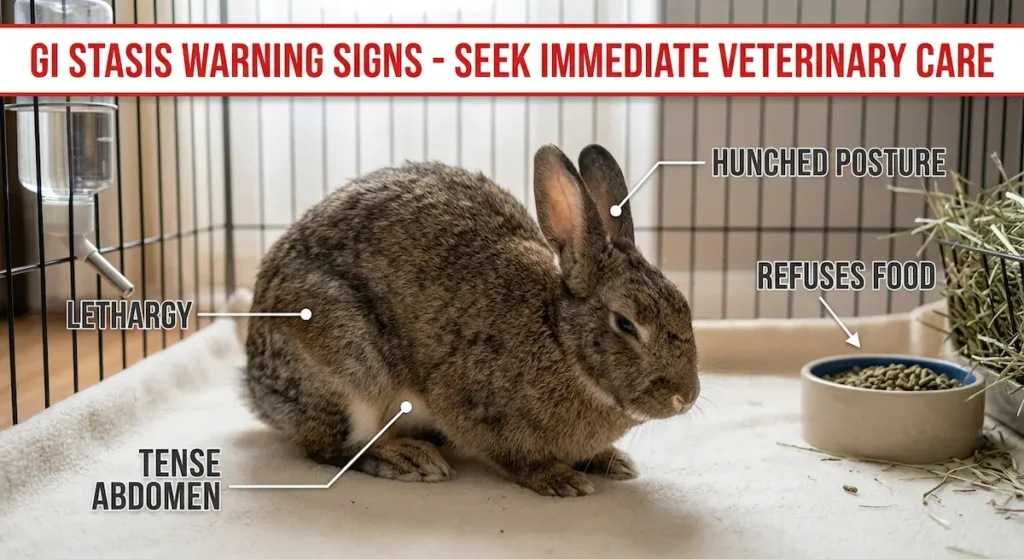
Gastrointestinal stasis is the condition that every rabbit owner must understand, recognize, and respond to immediately. It is not a minor stomachache. GI stasis occurs when the rabbit’s digestive system slows down or stops entirely. Because a rabbit’s gut relies on constant fiber-driven motility, any disruption can cause food and gas to accumulate, bacteria to proliferate abnormally, toxins to build up, and the liver to begin failing. Without treatment, GI stasis kills within 24 to 48 hours.
The signs of GI stasis in rabbits include: refusal to eat (especially hay), absence of fecal pellets or dramatically reduced output, lethargy, a hunched posture, teeth grinding (a pain response, distinct from the gentle “tooth purring” of contentment), and a bloated or tense abdomen. If your rabbit displays any combination of these symptoms, contact your exotic veterinarian immediately. Do not wait overnight. Do not “see how it goes in the morning.” Time is the enemy here.
A 2021 study published in the Journal of Exotic Pet Medicine analyzed 312 cases of GI stasis in pet rabbits and found that rabbits who received veterinary intervention within the first 12 hours had a survival rate exceeding 85%, while those presented after 24 hours had a survival rate below 40% (Oglesbee & Jenkins, 2021). Those numbers leave no room for ambiguity.
Common triggers include sudden diet changes, dehydration, pain from another condition (dental disease, urinary stones), stress from a new environment or loud noises, and insufficient hay intake. The single best preventive measure is ensuring your rabbit always has unlimited hay and fresh water available.
| Warning Sign | What You Observe | Urgency Level | Immediate Action |
|---|---|---|---|
| Refusing food (especially hay) | Rabbit turns away from hay, pellets, and favorite greens | 🔴 HIGH | Offer fresh herbs (cilantro, basil). If still refusing after 4–6 hours, contact vet. |
| No fecal pellets or very small/dry droppings | Litter box is empty or contains abnormally tiny, hard pellets | 🔴 HIGH | Palpate abdomen gently. If firm/bloated, seek emergency vet care immediately. |
| Lethargy / hiding | Rabbit is unusually still, unresponsive, or hiding in corners | 🔴 HIGH | Do not wait. Call your exotic vet or emergency animal hospital. |
| Hunched posture (“pressing”) | Sitting with body hunched tight, nose pressed to ground | 🔴 HIGH | Indicates abdominal pain. Administer 0.5 mL simethicone while arranging transport to vet. |
| Loud tooth grinding | Audible, sharp grinding (NOT soft tooth purring) | 🔴 HIGH | Strong pain signal. Do not delay vet visit. This is a medical emergency. |
| Bloated or tense abdomen | Belly feels hard, distended, or gurgling loudly | 🔴 CRITICAL | Possible full blockage. Transport to exotic emergency vet immediately. Minutes matter. |
| Sources: Oglesbee & Jenkins (2021), Journal of Exotic Pet Medicine & House Rabbit Society – GI Stasis: The Silent Killer | |||
How Often Should You Groom Your Indoor Rabbit?
Grooming is not cosmetic for rabbits. It is medically necessary. Rabbits groom themselves obsessively, and unlike cats, they cannot vomit. Every hair they ingest stays in their digestive tract. During heavy shedding seasons, which occur roughly every three months, the volume of ingested fur can form dense mats in the stomach and intestines, contributing directly to GI stasis.
Brush your rabbit at least once a week during normal periods and daily during heavy sheds. Use a fine-toothed flea comb or a rubber grooming mitt, as rabbit skin is exceptionally thin and tears easily. Never bathe a rabbit by immersing it in water. Rabbits are not adapted to getting wet, and the stress of a bath can cause hypothermia, shock, or cardiac arrest. If your rabbit soils its fur, spot-clean with a damp cloth only.
Nail trimming is equally essential. Rabbit nails grow quickly and can curl into the paw pad if neglected. Trim nails every 4 to 6 weeks using small animal nail clippers. If you are nervous about hitting the quick (the blood vessel inside the nail), ask your exotic vet to demonstrate the technique during a wellness visit.
How Do You Keep a House Rabbit Mentally Stimulated and Emotionally Fulfilled?
What Happens When a Rabbit Cannot Chew and Dig?
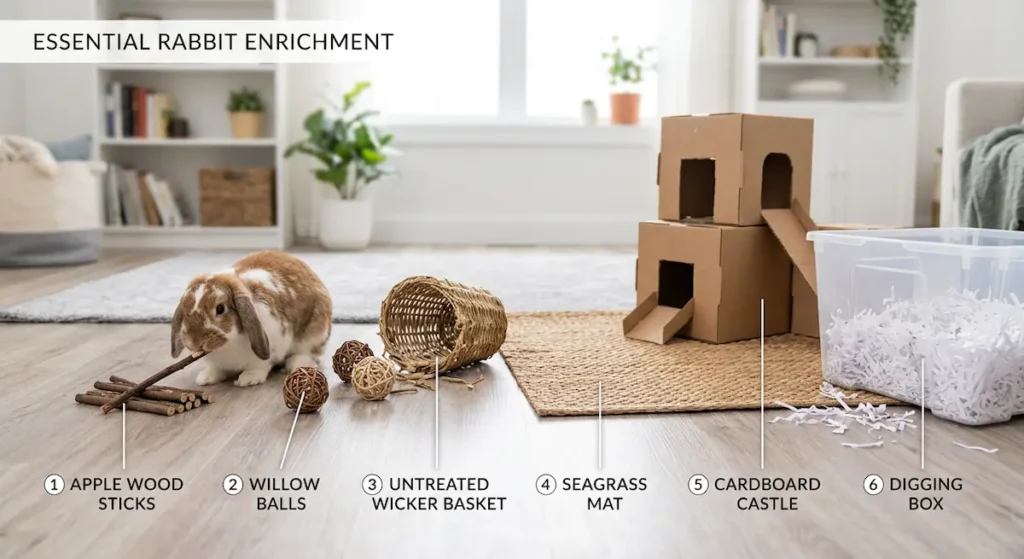
Boredom in rabbits leads directly to destructive behavior, depression, and health decline. These are not animals content to sit in a corner and stare at a wall. In the wild, European rabbits spend hours foraging, digging elaborate tunnel systems called warrens, and interacting socially with colony members. Your indoor rabbit retains every one of those instincts.
Provide an array of chew-safe toys: apple wood sticks, willow balls, untreated wicker baskets, and seagrass mats are all excellent options. Cardboard is a rabbit favorite — build tunnels from boxes, create “castles” with multiple levels, or simply give them a phone book to shred. Digging boxes are another highly enriching addition. Fill a large storage bin with shredded paper, old towels, or child-safe play balls, and watch your rabbit excavate with pure focus and satisfaction.
Rotate toys weekly. Rabbits, like humans, lose interest in familiar objects. A toy that was ignored for a month will suddenly become fascinating again after a two-week absence.
Should You Get a Second Rabbit for Companionship?
Rabbits are profoundly social animals. In their natural habitat, European rabbits (Oryctolagus cuniculus) live in colonies of 20 or more individuals. A solo house rabbit can thrive if its human family provides substantial daily interaction — a minimum of three to four hours of active social time outside the pen. But many rabbit welfare organizations, including the RSPCA and House Rabbit Society, advocate for keeping rabbits in bonded pairs whenever possible.
Bonding two rabbits is not as simple as placing them together and hoping for the best. Unbonded rabbits can fight viciously, causing deep bite wounds and serious injuries. The bonding process involves gradual, neutral-territory introductions over days or weeks, supervised at all times. Both rabbits must be spayed or neutered before bonding is attempted. When successful, though, the result is extraordinary. Bonded rabbits groom each other, sleep pressed together, and display visibly lower stress levels.
A 2018 study published in Applied Animal Behaviour Science demonstrated that pair-housed rabbits exhibited significantly fewer stress-related behaviors (bar chewing, excessive grooming, repetitive circling) and higher frequencies of play behavior compared to singly housed individuals (Schepers et al., 2018). The evidence strongly favors companionship.
Conclusion: Is the Commitment Worth It?
Living with a free-roam indoor rabbit is not a low-maintenance endeavor. It demands daily hay replenishment, weekly grooming, careful diet management, an exotic veterinarian on speed dial, and a home modified to accommodate an animal that views every cable as a personal challenge. The time commitment rivals that of a dog or cat, and the veterinary costs can match or exceed them.
But the reward defies easy description. There is something uniquely magical about sitting on your living room floor in the evening and having a rabbit hop into your lap, nudge your hand for head rubs, and then perform a full-body flop against your leg because it trusts you that completely. Watching a rabbit binky across the room at full speed, ears flying, legs twisting mid-air, is an experience that fills a house with genuine joy. These are not cage decorations. They are complex, affectionate, remarkably funny little souls who give back every ounce of care you pour into them.
If you already share your home with a rabbit, tell us its name in the comments below — we would love to hear your story. And if you are still on the fence about adopting, consider reaching out to a local rabbit rescue before visiting a pet store. Thousands of wonderful rabbits are waiting for a second chance at a real home.
What would your daily routine look like if a curious, binky-happy bunny were waiting for you every time you walked through your front door?
| Point of Comparison | 🏠 Free-Roam / X-Pen Indoor Housing | 🚫 Traditional Cage Housing |
|---|---|---|
| Minimum Living Space | 12+ sq ft (X-pen) or entire room(s) | 4–6 sq ft (far below welfare standards) |
| Exercise Opportunity | Unlimited or several hours of free running daily | Severely restricted; requires separate “out time” |
| Social Interaction | Constant; rabbit integrates into family life naturally | Limited; rabbit is often isolated and understimulated |
| Behavioral Health | Binkies, curiosity, bonding; reduced aggression | Bar chewing, thumping, cage aggression, depression |
| Litter Training Success | Very high (natural behavior flourishes in open space) | Moderate (territorial marking increases in confinement) |
| Physical Health Risks | Low risk of obesity, sore hocks, and muscle atrophy | High risk of pododermatitis, obesity, spinal issues |
| Early Health Detection | Easier; owner observes behavior changes quickly | Harder; rabbits may hide illness in a cage corner |
| Average Reported Lifespan | 8–12 years | 5–8 years |
| Rabbit-Proofing Required | Yes — cords, baseboards, gaps must be secured | Minimal (but at a severe welfare cost) |
| Veterinary Recommendation | Strongly preferred by RSPCA, AVMA, and House Rabbit Society | Considered inadequate by modern welfare standards |
| Sources: RSPCA – Rabbit Environment Guidelines | House Rabbit Society – Housing FAQ | Rooney et al. (2019), Veterinary Record | ||
Sources & Bibliography
Studies and Research Papers
- Rooney, N. J., Blackwell, E. J., Mullan, S. M., Saunders, R., Baker, P. E., Hill, J. M., Sealey, C. E., Turner, M. J., & Held, S. D. E. (2019). The current state of welfare, housing and husbandry of the English pet rabbit population. Veterinary Record, 184(6), 170. https://doi.org/10.1136/vr.104890
— Surveys the welfare conditions of pet rabbits in England, demonstrating that indoor housing correlates with improved health outcomes. - Prebble, J. L., Sheridan, H., Baker, P., & Sheridan, A. (2020). Assessment of the effect of diet on the physical and behavioral health of pet rabbits. Journal of Animal Physiology and Animal Nutrition, 104(4), 1144–1156. https://doi.org/10.1111/jpn.13344
— Confirms that hay-dominant diets reduce dental disease and GI disorders in companion rabbits. - Heatley, J. J., & Smith, A. N. (2004). Spontaneous neoplasms of lagomorphs. Veterinary Clinics of North America: Exotic Animal Practice, 7(3), 561–577. https://doi.org/10.1016/j.cvex.2004.04.009
— Documents the extremely high incidence of uterine adenocarcinoma in unspayed female rabbits. - Oglesbee, B. L., & Jenkins, J. R. (2021). Gastrointestinal diseases of rabbits. Journal of Exotic Pet Medicine, 39, 1–16. https://doi.org/10.1053/j.jepm.2021.04.002
— Analyzes survival rates for GI stasis cases based on timing of veterinary intervention. - Schepers, F., Koene, P., & Beerda, B. (2018). Welfare assessment in pet rabbits. Applied Animal Behaviour Science, 204, 57–65. https://doi.org/10.1016/j.applanim.2018.03.013
— Demonstrates lower stress behaviors in pair-housed rabbits compared to singly housed individuals. - Meredith, A., & Lord, B. (2022). Rabbit dentistry and oral disease: A clinical review. Journal of Small Animal Practice, 63(4), 251–265. https://doi.org/10.1111/jsap.13473
— Reviews the link between inadequate hay consumption and dental malocclusion in pet rabbits.
Official Organizations
- American Veterinary Medical Association (AVMA). (2024). Ownership of rabbits as pets. https://www.avma.org/resources-tools/reports-statistics/us-pet-ownership-statistics
— Provides statistics on rabbit ownership trends and general care guidelines in the US. - House Rabbit Society. (2024). Rabbit care resources. https://rabbit.org/care/
— The premier nonprofit resource for domestic rabbit welfare, housing, and diet information. - RSPCA. (2024). How to take care of your rabbit. https://www.rspca.org.uk/adviceandwelfare/pets/rabbits
— UK-based welfare guidelines emphasizing space requirements and social needs for pet rabbits. - ASPCA. (2024). Rabbit care guide. https://www.aspca.org/pet-care/small-pet-care/general-rabbit-care
— Covers toxic foods, basic housing, and general health for pet rabbits in the US. - Association of Exotic Mammal Veterinarians (AEMV). (2024). Finding an exotic vet. https://aemv.org/
— Professional organization for veterinarians specializing in exotic mammal medicine, including rabbits.
Books and Encyclopedias
- Moore, L., & Smith, M. (2016). Rabbit medicine and surgery for veterinary nurses. Wiley-Blackwell.
— A comprehensive clinical reference covering rabbit anatomy, anesthesia, and common diseases. - McBride, A. (2019). Why does my rabbit…? Souvenir Press.
— Explores rabbit behavior from an ethological perspective, ideal for understanding domestic rabbit psychology. - Varga, M. (2014). Textbook of rabbit medicine (2nd ed.). Butterworth-Heinemann/Elsevier.
— The definitive veterinary textbook on rabbit health, widely used in veterinary schools worldwide.
Simplified Science Articles
- Langley, L. (2021, March 15). What do rabbits really need to be happy? National Geographic. https://www.nationalgeographic.com/animals/article/what-rabbits-really-need-happy
— An accessible exploration of rabbit behavioral needs and the shift toward indoor housing standards.
Suggested Further Reading
1. Harriman, M. (2012). House Rabbit Handbook: How to Live with an Urban Rabbit (5th ed.). Drollery Press.
Why you should read this: Written by the founder of the House Rabbit Society, this book is the original manual that launched the indoor rabbit movement in North America. It covers everything from bonding techniques to litter training with decades of first-hand experience.
2. Buseth, M. E., & Saunders, R. (2015). Rabbit Behaviour, Health and Care. CABI Publishing.
Why you should read this: This book bridges the gap between academic veterinary science and practical pet ownership, offering detailed behavioral analysis alongside clinical care protocols. It is especially useful for owners managing multi-rabbit households.
3. Meredith, A., & Johnson-Delaney, C. (2020). “Exotic Animal Medicine: A Review.” Veterinary Clinics of North America: Exotic Animal Practice, 23(1), entire issue. Elsevier.
Why you should read this: This review compilation covers the latest developments in exotic animal medicine as of 2020, including updated GI stasis treatment protocols and pain management strategies specifically for rabbits. Essential reading for any owner who wants to speak their exotic vet’s language.
If this guide helped you feel more prepared and confident about welcoming a rabbit into your home, consider sharing it with someone else who is thinking about adoption. Bookmark this page on Hamah Plus, and check back regularly as we update our content to reflect the latest in veterinary research and animal welfare standards. Your rabbit deserves the best — and now you know exactly how to provide it.