
Smart Drywall Alternatives: The Complete Guide to Self-Healing Wall Materials
Can Your Walls Actually Fix Themselves Without Patching or Sanding?

Quick Answer: Self-healing wall materials are advanced building products embedded with biological agents, microcapsules, or shape-memory polymers that autonomously repair cracks and minor damage without human intervention. These smart drywall alternatives include bio-concrete plaster, magnesium oxide boards with self-repairing coatings, and mycelium-based panels. They reduce long-term maintenance costs, resist moisture and mold, and represent a practical leap beyond traditional gypsum drywall for residential interiors.
Have you ever spent a weekend spackling hairline cracks in your living room wall, only to watch them creep back six months later? That slow, maddening return of cracks along ceiling joints and corners drives homeowners to frustration year after year. The patching, priming, sanding, repainting — it never truly ends with conventional drywall. Now imagine a wall that quietly seals its own cracks while you sleep. That is not science fiction anymore. The information you are about to read covers the real science, the real products, and the real financial math behind walls that heal themselves. Whether you live in a humid coastal city or a scorching desert climate, this changes how you think about your next renovation.
Here is a practical scenario to ground everything. Picture a family bathroom in Riyadh or Dubai. Temperatures swing wildly. The air conditioning runs hard, creating constant thermal stress on interior walls. A hairline crack forms near the shower enclosure. In a traditional gypsum wall, moisture seeps in, feeds mold behind the surface, and within a year, you are looking at a costly tear-out. Now picture that same wall built with a bio-plaster finish. When the crack opens, ambient moisture activates dormant bacteria within the plaster. Those bacteria produce calcium carbonate — essentially limestone — filling the crack from the inside. No contractor call. No mold. The wall just handled it. That is the promise, and increasingly, it is the reality.
- Replace gypsum drywall with MgO boards in moisture-prone rooms — bathrooms, kitchens, laundry areas.
- Apply bio-plaster finish coats over existing walls to gain autonomous crack repair without full tear-out.
- Use a hybrid approach (MgO substrate + bio-plaster in high-risk zones) to cut premium costs by 70%.
- Ask contractors about MgO board experience — installation mirrors standard drywall framing.
- Contact green building material distributors affiliated with regional Green Building Councils.
- Request separate material and labor quotes to compare the true smart-material premium.
- Dormant Bacillus bacteria embedded in bio-plaster produce limestone (CaCO₃) to seal cracks up to 0.8 mm wide — triggered only by moisture entering the crack.
- Microcapsule-based coatings release healing resin automatically when cracked — no moisture needed.
- All biological agents used are Biosafety Level 1 — completely safe for humans, children, and pets.
- Upfront cost: 40%–100% higher than gypsum drywall.
- 20-year total ownership: $4,500–$8,000 (smart walls) vs. $8,000–$25,000 (traditional drywall).
- Break-even point: 7–10 years in most climates; faster in hot, humid, or arid regions.
Why Is Traditional Drywall Considered Outdated?
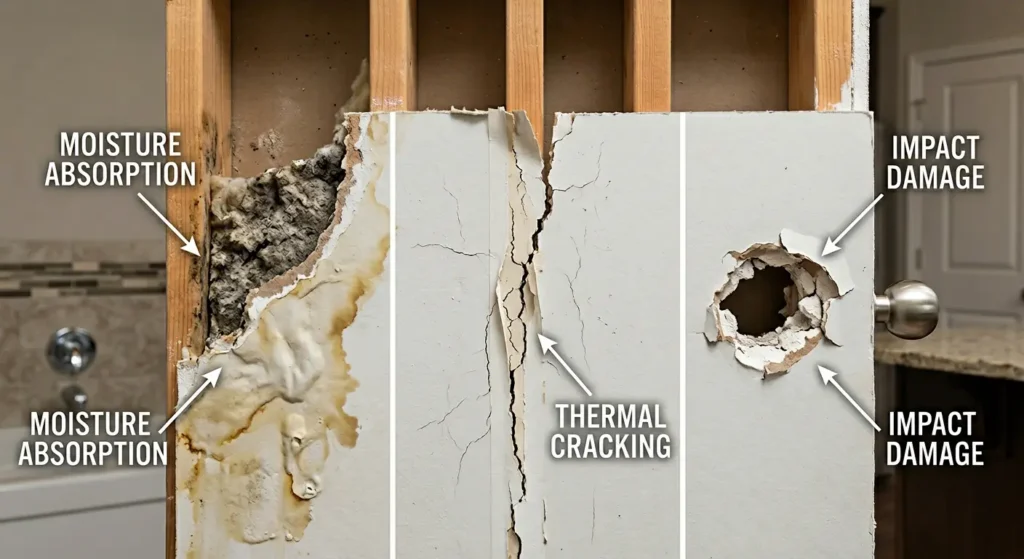
Standard drywall, technically called gypsum wallboard (Gyproc or plasterboard in some regions), has dominated interior construction since the mid-20th century. It was cheap. It was fast to install. And for decades, those two qualities were enough.
But gypsum carries serious weaknesses that homeowners in hot, arid, and humid climates know intimately. First, it absorbs moisture like a sponge. In Middle Eastern homes where humidity can spike during coastal summers or from aggressive air conditioning condensation, gypsum boards swell, warp, and become breeding grounds for black mold (Stachybotrys chartarum). Second, structural settling — completely normal in new construction — creates cracks that demand repeated patching. Third, drywall is fragile. A doorknob, a child’s toy, even leaning furniture can punch through it.
The labor economics make it worse. Repairing drywall is not just about the $15 tub of joint compound. It is the painter you hire, the time you lose, the dust that coats your furniture. In regions with extreme temperature swings — think Amman, Cairo, or Phoenix — thermal expansion and contraction stress drywall joints constantly. You fix a crack in March. It returns by October.
https://www.epa.gov/facts-and-figures-about-materials-waste-and-recycling/construction-and-demolition-debris-material
U.S. Environmental Protection Agency (EPA) — Construction and Demolition Debris Data
This cycle of damage, repair, and waste is exactly what makes smart drywall alternatives so compelling. Self-repairing walls are not a luxury curiosity. They are a practical answer to a problem that costs homeowners hundreds of dollars and dozens of hours every single year.
What Are Self-Healing Wall Materials and How Do They Actually Work?
At its core, a self-healing material is any building product engineered to detect damage and repair it autonomously. The concept borrows from biology — think of how skin closes a cut or bone knits a fracture. Material scientists have spent the last two decades embedding similar repair mechanisms into concrete, plaster, polymers, and composite boards.
For homeowners, the terminology can feel overwhelming. Bio-concrete, microcapsule healing agents, shape-memory alloys — these sound like lab experiments. But the underlying principles are surprisingly straightforward. The material contains a hidden “repair kit” locked inside it. When a crack forms, that kit activates and fills the gap. No human needed.
Two main families of self-healing technology exist today. Biological healing uses living microorganisms. Chemical or mechanical healing uses engineered capsules or polymers. Let us break both down.
How Do Bacteria-Infused Materials Seal Cracks on Their Own?
This is where the science feels almost magical. Researchers at Delft University of Technology in the Netherlands, led by microbiologist Henk Jonkers, pioneered the concept of bio-concrete in the early 2010s. The principle has since been adapted for plasters and interior finishes.
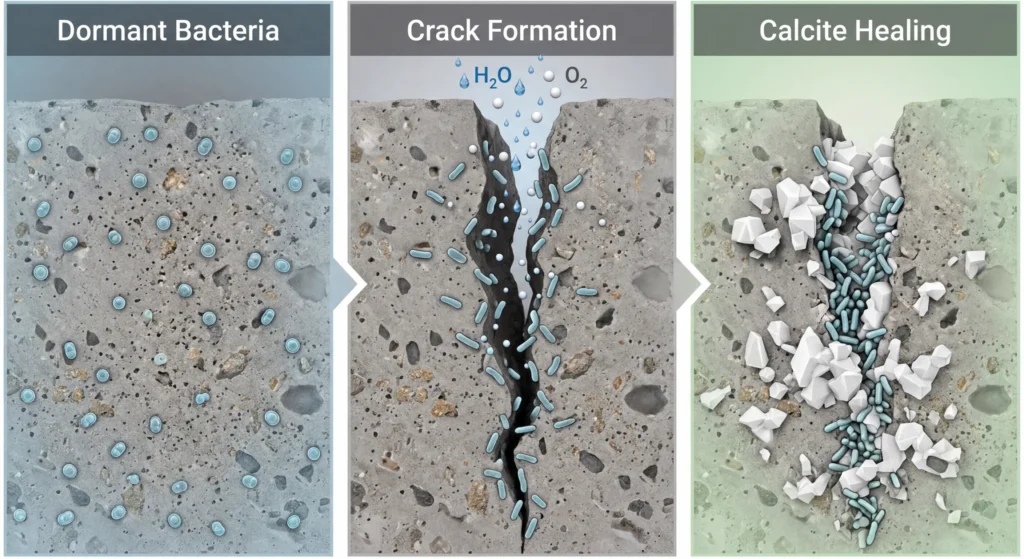
Here is the step-by-step process. During manufacturing, dormant spores of calcium-producing bacteria — typically from the Bacillus genus (Bacillus pseudofirmus or Bacillus cohnii) — are mixed into the material along with a nutrient source, usually calcium lactate. These bacteria can survive in a dormant state for over 200 years. They sit inside the wall, inactive and harmless, waiting.
When a crack forms, moisture and oxygen enter through it. This wakes the bacteria. They begin metabolizing the calcium lactate and, as a byproduct, produce calcite (calcium carbonate, CaCO₃) — the same mineral that makes up limestone and marble. The calcite crystals grow and physically seal the crack. A study published in the journal Ecological Engineering in 2015 confirmed that bio-concrete specimens healed cracks up to 0.8 millimeters wide within 28 days under wet conditions.
https://doi.org/10.1016/j.ecoleng.2008.12.036
Jonkers, H. M., et al. (2010). Application of bacteria as self-healing agent for the development of sustainable concrete. Ecological Engineering, Delft University of Technology.
Professor of Bacteria-based Building Materials
Delft University of Technology (TU Delft), Netherlands
For interior wall applications, the same principle applies to bio-plaster formulations. The healing process requires some moisture, which is why this technology works exceptionally well in bathrooms, kitchens, and laundry rooms — the very places where walls crack and degrade fastest.
What Are Microcapsules and Shape-Memory Polymers?
Not all self-healing wall materials rely on living organisms. The second major approach is purely chemical and mechanical.
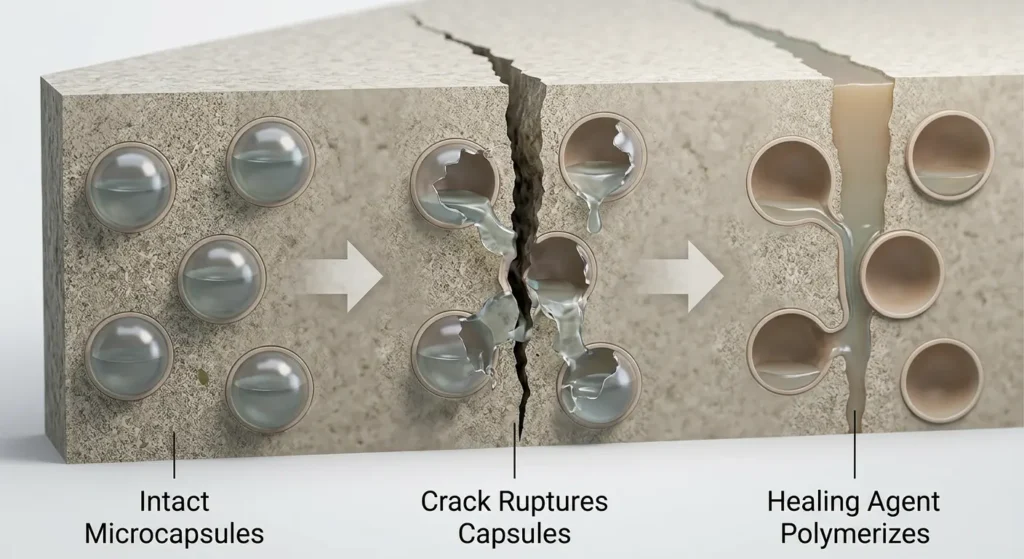
Microcapsule technology embeds tiny polymer shells — typically 50 to 300 micrometers in diameter — throughout the wall material. Each capsule contains a liquid healing agent (often an epoxy or methyl methacrylate resin). When a crack propagates through the material, it ruptures capsules in its path. The healing agent flows into the crack via capillary action and polymerizes (hardens), bonding the crack surfaces together.
A landmark study by Scott White and colleagues at the University of Illinois at Urbana-Champaign, published in Nature (2001), demonstrated this concept in structural polymers. Since then, the technology has been refined for building products, including interior wall panels and coatings.
Shape-memory polymers (SMPs) take a different approach. These materials are engineered to “remember” their original shape. When damaged, the application of mild heat — sometimes as little as the warmth from a hand or a heat lamp — triggers the polymer to return to its pre-damage configuration, effectively closing cracks and dents.
For homeowners, the practical difference is this: bio-healing needs moisture, microcapsule healing is triggered by the crack itself, and SMP healing needs gentle heat. Each has ideal use cases depending on your home’s climate and the wall’s location.
| Comparison Aspect | Biological Healing (Bacteria-Based) | Chemical / Mechanical Healing (Microcapsules & SMPs) |
|---|---|---|
| Healing Trigger | Moisture + oxygen entering the crack | Crack ruptures microcapsules (automatic) or mild heat activates SMPs |
| Healing Agent | Calcite (CaCO₃) produced by dormant Bacillus bacteria | Epoxy resin or methyl methacrylate released from capsules; polymer shape recovery |
| Maximum Crack Width Healed | Up to 0.8 mm | Up to 0.3–0.5 mm (capsules); surface dents (SMPs) |
| Healing Speed | Days to weeks (depends on moisture and temperature) | Hours to days (capsules polymerize quickly); minutes (SMPs with heat) |
| Repeatability | High — bacteria can produce calcite repeatedly as long as nutrients remain | Limited — each capsule heals only once; SMPs can repeat if damage is minor |
| Best Climate Fit | Humid or moisture-prone areas (bathrooms, kitchens, coastal homes) | Any climate — activation does not depend on moisture |
| Environmental Benefit | Absorbs CO₂ during calcite formation | Reduces material waste; extends product lifespan |
| Safety Profile | BSL-1 organisms — no health risk to humans or pets | Encapsulated resins — no VOC release until crack event; polymerize quickly |
|
Sources: https://doi.org/10.1038/35057232 White, S. R., et al. (2001). Autonomic healing of polymer composites. Nature, University of Illinois at Urbana-Champaign | https://doi.org/10.1016/j.ecoleng.2008.12.036 Jonkers, H. M., et al. (2010). Ecological Engineering, Delft University of Technology |
||
Which Smart Drywall Alternatives Can Homeowners Actually Use?
The gap between laboratory research and products you can install in your home is shrinking fast. Here are the most promising interior wall alternatives available or emerging as of 2025.
Are Magnesium Oxide Smart Boards Ready for Residential Use?
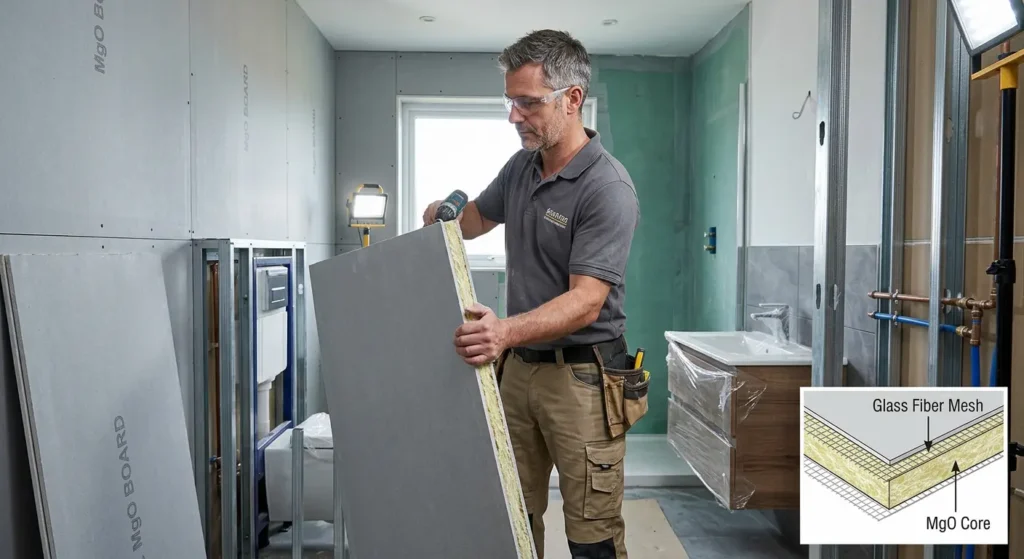
Magnesium oxide (MgO) boards have been used in construction across Asia for over two decades. They are made from magnesium oxide, magnesium chloride, and reinforcing fibers (typically glass fiber mesh). Unlike gypsum, MgO boards are naturally fire-resistant, waterproof, and mold-proof.
On their own, MgO boards are already a superior drywall alternative. They handle humidity without swelling. They resist impact better than gypsum. They do not emit toxic fumes when exposed to flame — a critical safety advantage.
Now, the smart layer. Several manufacturers and research groups are developing self-healing coatings specifically for MgO substrates. These coatings incorporate microcapsule technology. When surface cracks appear, healing agents release and seal damage before moisture can penetrate the board’s core.
In hot and dry climates — the kind found across the Arabian Peninsula, North Africa, and the American Southwest — MgO boards already outperform gypsum dramatically. Adding a self-repairing surface finish transforms them into a genuinely low-maintenance wall system.
https://www.thisoldhouse.com/
This Old House — MgO Board Product Reference and Installation Guidelines
Can Bio-Plaster and Smart Stucco Heal Interior Walls?
Bio-plaster is where the bacteria-based healing technology gets most exciting for homeowners. Rather than replacing your entire wall substrate, you apply a bio-plaster finish coat — typically 3 to 6 millimeters thick — over existing walls or new substrates.
Living building materials (LBMs) represent a growing category in construction science. Researchers at the University of Colorado Boulder published findings in 2020 in the journal Matter demonstrating that cyanobacteria could be incorporated into sand-gelatin scaffolds to create “living” building blocks. While those specific blocks target structural applications, the concept of embedding photosynthetic or calcite-producing organisms into plaster is advancing rapidly.
Associate Professor of Architectural Engineering and Materials Science
University of Colorado Boulder, USA
Smart stucco extends this concept to exterior-adjacent interior surfaces. Think of the interior face of exterior walls in Mediterranean and Middle Eastern homes, where temperature differentials cause persistent cracking. A smart stucco with embedded Bacillus spores and calcium lactate nutrients would continuously repair thermal stress cracks without any human intervention.
The practical limitation today is availability. As of early 2025, bio-plaster remains largely in pilot and small-batch production. Companies like Basilisk (a spin-off from Delft University) sell bio-healing agents for concrete repair, and adapting these for plaster applications is an active area of development. Homeowners interested in being early adopters should look for architects and contractors connected to green building material networks.
What Are Mycelium Panels and Should You Consider Them?
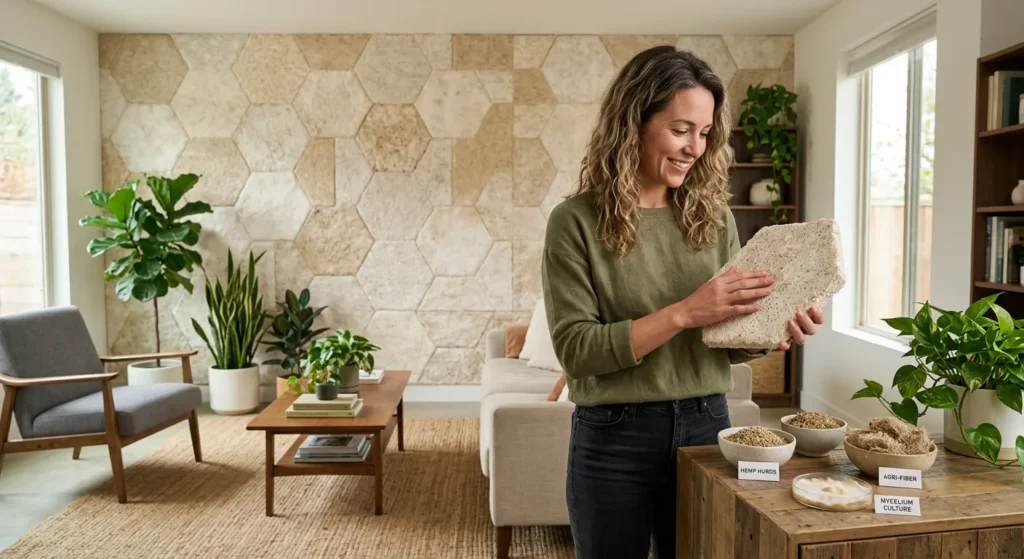
This is where futuristic building materials meet ecology. Mycelium — the root network of mushrooms — can be grown into dense, rigid panels using agricultural waste as a substrate (hemp hurds, corn stalks, sawdust). Companies like Ecovative Design in New York have commercialized mycelium-based packaging and insulation, and architectural-grade wall panels are following.
Mycelium panels are fire-resistant (they char rather than combust), excellent acoustic insulators, and fully compostable at end of life. Their carbon footprint is a fraction of gypsum or cement-based products because the mycelium grows at room temperature, consuming CO₂ during its growth phase.
The “self-healing” aspect of mycelium is biological in a different way than bio-concrete. Under controlled humidity, living mycelium networks can regrow into damaged areas, literally filling cracks with new fungal tissue. Researchers at NASA’s Ames Research Center have studied mycelium as a potential building material for lunar habitats — a testament to its durability and self-regenerating potential.
For homes in arid climates, mycelium panels need careful moisture management. They are best suited for interior partition walls, accent walls, and acoustic panels rather than exterior-facing surfaces. Their thermal insulation properties — roughly R-3 per inch — make them a practical addition in climate zones where cooling loads are high.
https://doi.org/10.1038/srep41292
Haneef, M., et al. (2017). Advanced materials from fungal mycelium. Scientific Reports, Nature Publishing Group.
How Do Traditional Drywall and Self-Healing Alternatives Compare?
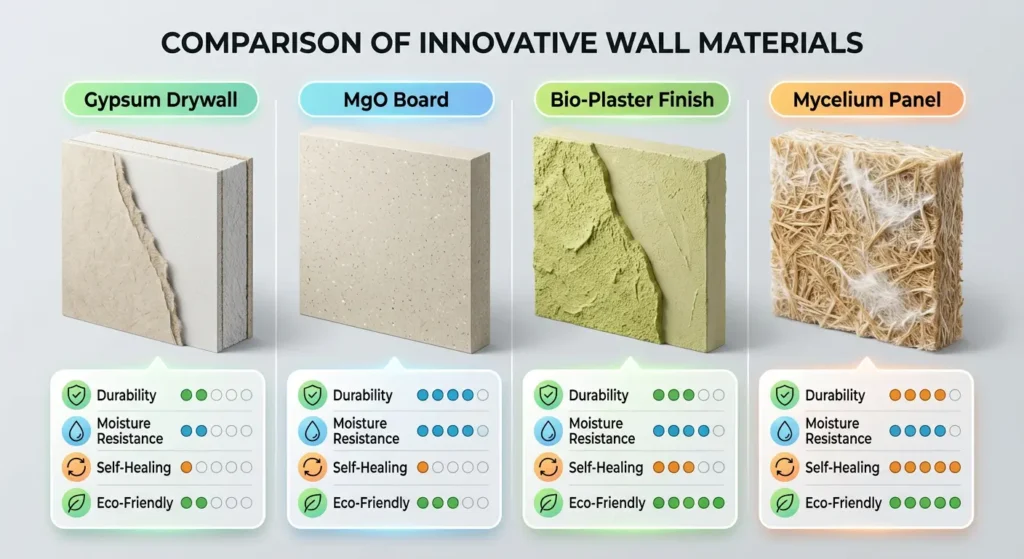
Let us lay this out clearly across the metrics that matter most to homeowners.
Durability:
- Traditional gypsum drywall is vulnerable to impact, moisture, and thermal stress. Lifespan of 30–50 years in ideal conditions, but functional degradation (cracks, water staining) begins much sooner.
- MgO smart boards resist fire, water, and impact. Expected lifespan exceeding 50 years.
- Bio-plaster finishes autonomously seal cracks up to 0.8 mm wide. Surface stays intact far longer than conventional joint compound patches.
- Mycelium panels resist fire and absorb sound. Structural integrity is strong but requires protection from sustained high humidity.
Maintenance Requirements:
- Gypsum drywall demands regular patching, sanding, and repainting — typically every 3 to 5 years for high-traffic or high-moisture areas.
- Self-healing alternatives reduce or eliminate patching cycles. Bio-plaster heals autonomously. MgO boards rarely crack. Mycelium panels show minimal surface degradation.
Eco-Friendliness:
- Gypsum mining disrupts landscapes. Manufacturing requires high-temperature kilns. End-of-life disposal creates landfill waste and hydrogen sulfide gas.
- MgO boards use magnesium oxide, which is abundant and less energy-intensive to process. Bio-plaster ingredients are largely organic. Mycelium panels are fully biodegradable and sequester carbon during growth.
Installation Complexity:
- Gypsum drywall has the lowest barrier. Every contractor knows how to hang it.
- MgO boards install almost identically to gypsum — same screws, same stud spacing. Minor adjustments for cutting (score-and-snap works, but a circular saw with a carbide blade is cleaner).
- Bio-plaster applies like any traditional plaster finish. No special tools needed.
- Mycelium panels are lighter than gypsum but may require custom fastening solutions since standardized systems are still emerging.
| Comparison Aspect | Traditional Gypsum Drywall | Self-Healing Wall Alternatives (MgO / Bio-Plaster / Mycelium) |
|---|---|---|
| Material Lifespan | 30–50 years (functional degradation begins within 5–10 years) | 50+ years (surface integrity maintained through autonomous repair) |
| Moisture Resistance | Poor — absorbs moisture, swells, promotes mold growth | Excellent — MgO is waterproof; bio-plaster activates healing with moisture |
| Crack Self-Repair | None — requires manual patching and repainting | Autonomous repair of cracks up to 0.8 mm wide |
| Fire Resistance | Moderate — fire-rated versions available but can crumble at high temperatures | High — MgO boards are Class A fire-rated; mycelium chars without combustion |
| Impact Resistance | Low — easily punctured by doorknobs, furniture, and minor impacts | Moderate to High — MgO boards are significantly denser and harder |
| Mold Risk | High — gypsum and paper facing are ideal substrates for mold | Near Zero — inorganic substrates; cracks sealed before moisture intrusion |
| Maintenance Frequency | Every 3–5 years (patching, sanding, repainting) | Minimal — visual inspection only; no routine patching required |
| Eco-Friendliness | Poor — energy-intensive manufacturing; landfill waste produces H₂S gas | High — lower embodied energy; bio-healing absorbs CO₂; mycelium is compostable |
| Installation Complexity | Low — universal contractor familiarity | Low to Moderate — MgO installs like drywall; bio-plaster applies like standard plaster; mycelium panels may need custom fastening |
| Upfront Cost (per m²) | $8–$15 | $18–$30 (MgO + smart coating) |
| Suitability for Hot/Arid Climates | Moderate — thermal stress causes persistent cracking | Excellent — self-healing compensates for thermal cycling; MgO resists extreme heat |
|
Sources: https://www.epa.gov/facts-and-figures-about-materials-waste-and-recycling U.S. Environmental Protection Agency (EPA) — Construction and Demolition Debris Data | https://doi.org/10.1016/j.ecoleng.2008.12.036 Jonkers et al. (2010), Ecological Engineering, Delft University of Technology | https://www.thisoldhouse.com/ This Old House — MgO Board Reference |
||
Is the Investment in Smart Walls Actually Worth It?
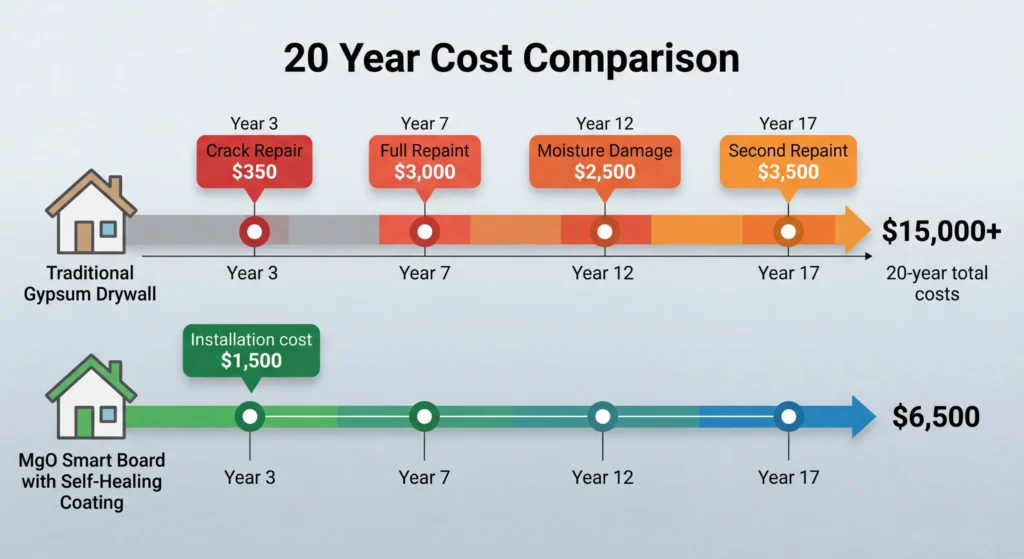
This is the question that determines whether self-healing wall materials move from interesting concept to installed reality in your home. The financial math is more favorable than most people expect.
Let us model a specific scenario. Consider a 150-square-meter home interior in a hot, dry climate — Jeddah, Dubai, or Tucson. Traditional drywall installation costs roughly $8 to $15 per square meter (materials plus labor). Over 20 years, maintenance costs include:
- Crack repair and patching: 2–3 times at $200–$500 each
- Full repaint due to accumulated damage: 2–3 times at $2,000–$4,000 each
- Moisture damage repair (one significant incident): $1,500–$5,000
- Mold remediation (if it occurs): $3,000–$10,000
Total 20-year cost of ownership for traditional drywall: roughly $8,000 to $25,000, depending on severity.
Now compare MgO smart boards with a self-healing coating. The upfront material cost is higher — approximately $18 to $30 per square meter. Installation labor is comparable. But over 20 years:
- Crack repair: near zero (self-healing surface)
- Repaint frequency: reduced by at least 50% (fewer surface defects)
- Moisture damage: near zero (MgO is waterproof)
- Mold risk: near zero
Total 20-year cost of ownership: approximately $4,500 to $8,000.
The return on investment becomes clear within the first decade. Furthermore, homes built with sustainable wall panels and futuristic building materials command premium resale values. A 2023 report from the National Association of Realtors found that green-certified homes sold for 3% to 5% more than comparable conventional homes.
| Cost Category | Traditional Gypsum Drywall | MgO Boards + Self-Healing Coating |
|---|---|---|
| Upfront Material Cost (per m²) | $8–$15 | $18–$30 |
| Total Upfront Material (150 m²) | $1,200–$2,250 | $2,700–$4,500 |
| Crack Repair Costs (20 years) | $400–$1,500 (2–3 repair cycles) | ~$0 (autonomous healing) |
| Full Repaint Costs (20 years) | $4,000–$12,000 (2–3 full repaints) | $2,000–$4,000 (1 repaint, if desired) |
| Moisture / Water Damage Repair | $1,500–$5,000 (one significant incident) | ~$0 (waterproof substrate) |
| Mold Remediation (if occurs) | $3,000–$10,000 | ~$0 (mold-resistant material) |
| Estimated Total 20-Year Cost | $8,000–$25,000+ | $4,500–$8,000 |
| Break-Even Point | Smart wall materials typically offset their upfront premium within 7–10 years through maintenance savings | |
|
Sources: https://www.nar.realtor/sustainability National Association of Realtors (NAR) — 2023 Realtors and Sustainability Report | https://www.epa.gov/facts-and-figures-about-materials-waste-and-recycling U.S. Environmental Protection Agency (EPA) | Estimates compiled from industry data and contractor pricing surveys (2023–2025). |
||
https://www.nar.realtor/sustainability
National Association of Realtors (NAR) — 2023 Realtors and Sustainability Report
How Can You Start Using Self-Healing Materials in Your Next Renovation?
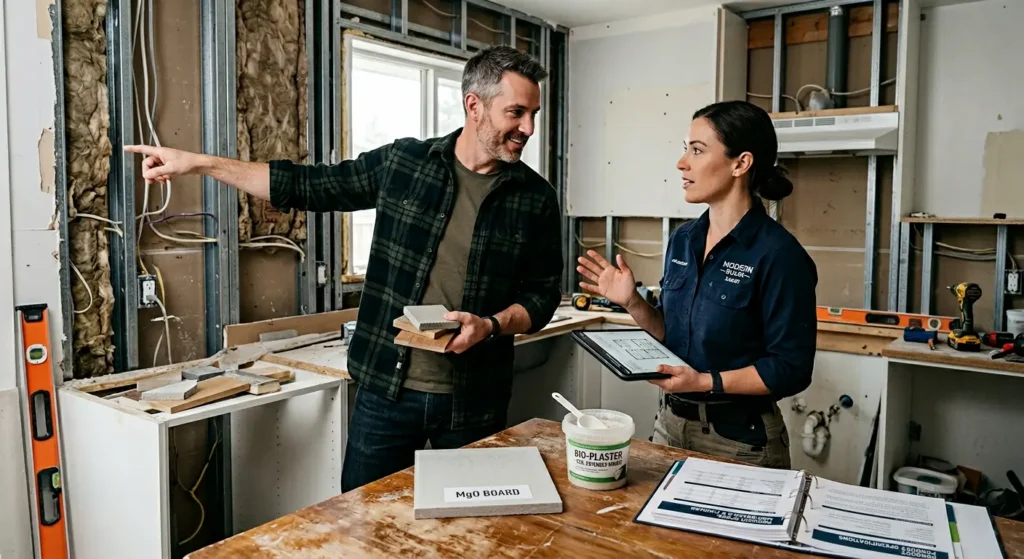
You do not need to rebuild your entire home. The smartest approach is targeted. Start where damage is most frequent and most costly.
Bathrooms and kitchens are the obvious first candidates. These rooms see the most moisture, the most thermal cycling (from cooking heat and shower steam), and the most wall degradation. Applying a bio-plaster or self-healing plaster finish in these rooms gives you the highest return for the lowest investment.
Secondly, consider MgO boards for any room where you are tearing out existing drywall due to water damage or mold. If you are already paying for demolition and reinstallation, the marginal cost difference to upgrade to MgO is minimal. In fact, given the labor costs in major Middle Eastern and Mediterranean cities, the material cost difference is often less than 15% of the total project budget.
Here is how to approach the conversation with your contractor:
- Ask specifically whether they have experience with magnesium oxide boards. Many contractors in the Gulf region already use them for fire-rated assemblies.
- Request samples from suppliers like Mago Board, Dragon Board, or regional equivalents. Compare thickness, density, and edge profiles to standard drywall.
- For bio-plaster finishes, contact green building material distributors. In the Middle East, look for companies affiliated with the Green Building Council chapters in UAE, Saudi Arabia, or Jordan.
- Get a written quote that separates material cost from labor cost. This lets you compare the true premium of smart materials versus the installation labor (which should be nearly identical).
Do not expect every contractor to know about self-healing wall materials yet. You may need to educate them. Bring printed specification sheets. Share links to manufacturer installation guides. Contractors are practical people — once they see that MgO boards cut, screw, and finish similarly to gypsum, resistance drops quickly.
https://www.thisoldhouse.com/
This Old House — Home Renovation Planning and Material Selection Resources
What Is the Environmental Case for Self-Repairing Walls?
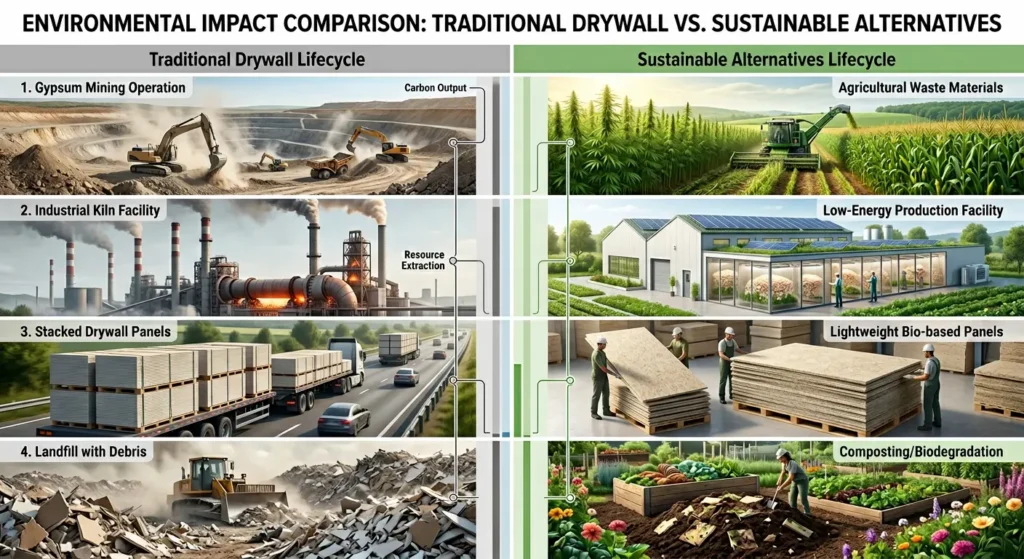
Traditional drywall is an environmental headache at every stage of its life. Mining gypsum scars landscapes. Manufacturing boards requires heating gypsum to approximately 150°C to drive off water (a process called calcination), consuming significant energy. Transportation is heavy — gypsum boards are dense and bulky. And at end of life, most drywall ends up in landfills.
The EPA reports that approximately 13 million tons of gypsum drywall waste is generated in the United States annually. Only a small fraction is recycled. When gypsum decomposes in anaerobic landfill conditions, it releases hydrogen sulfide — a toxic, foul-smelling gas.
Self-healing wall materials disrupt this cycle in multiple ways. MgO boards last longer, reducing replacement frequency. Bio-plaster extends surface life, eliminating the waste stream of patching compounds, primer, and paint. Mycelium panels are grown from agricultural waste and are fully compostable — they return to the soil at end of life.
Moreover, the biological healing process in bio-concrete and bio-plaster actively absorbs CO₂. When bacteria produce calcium carbonate, they metabolize carbon dioxide as part of the reaction. A 2018 study published in Construction and Building Materials estimated that bacterial self-healing in concrete can offset between 2% and 5% of the cement’s embodied carbon over the structure’s lifetime. For interior plasters, the percentage is smaller in absolute terms but still meaningfully positive.
Donald B. Willett Professor of Engineering, Materials Science and Engineering
University of Illinois at Urbana-Champaign, Beckman Institute, USA
In regions like the Persian Gulf, where construction booms generate enormous material waste, the shift to sustainable wall panels and living building materials is not just environmentally responsible — it is increasingly a regulatory direction. The UAE’s Estidama Pearl Rating System and Saudi Arabia’s Mostadam sustainability rating both award credits for materials with extended lifespans and reduced lifecycle environmental impact.
https://www.upc.gov.ae/en/publications/pearl-rating-system
Abu Dhabi Urban Planning Council — Estidama Pearl Building Rating System
Are Self-Healing Walls Safe for Home Interiors?
Safety is a legitimate concern whenever someone mentions “bacteria in your walls.” So let us address it directly. Are self-healing walls safe for home interiors? Yes. Unambiguously.
The bacterial species used — primarily Bacillus pseudofirmus and Bacillus cohnii — are classified as Biosafety Level 1 (BSL-1) organisms. This is the lowest risk category, meaning they pose no known threat to healthy humans, animals, or plants. They do not produce toxins. They do not cause infections. They are, frankly, far less concerning than the mold that grows inside conventional damp drywall.
Once embedded in the plaster or concrete matrix, the bacteria exist in spore form. Spores are inert. They do not reproduce, do not release any substances, and do not interact with indoor air. Only when a crack exposes them to moisture and oxygen do they activate — and even then, their activity is localized to the crack interior.
Indoor air quality (IAQ) testing on bio-concrete specimens has shown no increase in airborne bacteria, volatile organic compounds (VOCs), or particulates compared to conventional concrete. In fact, because self-healing wall materials resist cracking and moisture intrusion, they may actually improve indoor air quality over time by preventing the mold growth that plagues conventional drywall.
What Challenges Still Exist with Self-Healing Wall Technology?
Honesty matters more than hype. Self-healing wall materials are promising, but they are not perfect — not yet. Several challenges remain.
Crack size limits are real. Current bio-healing technology works reliably on cracks up to about 0.8 mm wide. Larger cracks — the kind caused by significant structural movement or seismic activity — still require manual repair. Microcapsule-based systems face similar constraints. They heal surface cracks, not structural failures.
Healing speed varies. In warm, humid conditions, biological healing can seal a crack in days to weeks. In cold, dry environments, the process slows dramatically. For homeowners in arid desert climates, the healing process may require deliberate moisture application (misting the crack periodically) to activate bacteria.
Cost and availability remain barriers. Bio-plaster is not yet available at your local building supply store. MgO boards are increasingly accessible — especially in Asia and the Middle East — but smart coatings with self-healing properties are still largely custom or specialty products.
Standardization is incomplete. Building codes in most countries have not yet been updated to specifically address self-healing wall materials. Contractors may face uncertainty about warranty coverage, fire ratings, and structural approvals. This is changing — ASTM and ISO committees are developing testing standards — but the process takes time.
https://doi.org/10.1007/s00253-016-7316-z
Seifan, M., et al. (2016). Bioconcrete: next generation of self-healing concrete. Applied Microbiology and Biotechnology.
https://www.astm.org/
ASTM International — Standards for Building Materials | https://www.epa.gov/indoor-air-quality-iaq
U.S. Environmental Protection Agency (EPA) — Indoor Air Quality | https://www.iso.org/standard/54431.html
International Organization for Standardization (ISO) | https://www.upc.gov.ae/en/publications/pearl-rating-system
Abu Dhabi Urban Planning Council — Estidama
What Does the Future of Home Construction Look Like?
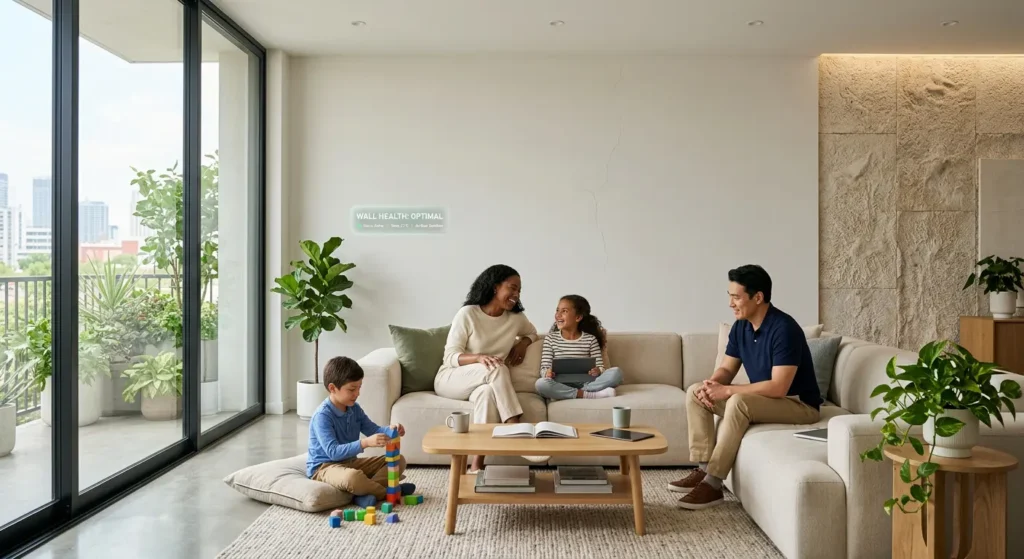
The trajectory is clear. Self-healing wall materials will become standard in residential construction within a generation. The economic incentives align. The environmental pressures are mounting. And the technology is maturing faster than most homeowners realize.
Imagine a home built in 2035. Its interior walls are MgO-based panels with embedded microcapsule healing agents. The plaster finish contains dormant bacteria. Accent walls and room dividers are grown from mycelium. The heating and cooling system creates less thermal stress on walls because the building envelope is smarter, and the walls that do experience stress simply fix themselves.
Maintenance becomes a quarterly visual inspection rather than an annual patching project. Paint lasts twice as long because the substrate beneath it stays smooth and crack-free. Mold becomes a historical problem, something your parents dealt with but you never encounter.
For homeowners in the Middle East and Mediterranean regions, where heat, humidity swings, and sand-laden winds assault building surfaces relentlessly, self-repairing walls are not a luxury. They are an inevitability. The cost of constant traditional maintenance in these climates makes the financial case for smart materials stronger than in any temperate region.
From another perspective, the cultural significance matters too. In regions where homes are built to last generations — where a grandfather’s house becomes a family compound — materials that maintain themselves across decades align perfectly with the tradition of building once and building well.
The future of home construction is not about flashy technology. It is about walls that quietly do their job — protecting your family, maintaining your comfort, preserving your investment — without constantly demanding your attention, your money, and your weekends.
If your walls could fix themselves, would you ever go back to gypsum drywall — and more importantly, would you trust a wall that heals its own cracks to protect your home for the next fifty years?
FAQs
The information provided in this article is for educational and informational purposes only. It does not constitute professional construction, engineering, or architectural advice. Self-healing wall materials, bio-concrete products, and other smart building materials discussed herein are subject to regional building codes, safety regulations, and availability that vary by location.
Before purchasing or installing any alternative wall material, consult a licensed contractor, structural engineer, or building inspector in your jurisdiction to ensure compliance with local codes and regulations. Material performance may vary based on climate, installation quality, and specific product formulation.
Hamah Plus (hamahplus.net) does not guarantee specific outcomes from the use of any materials or techniques described. All cost estimates are approximate and based on available industry data as of early 2025. Always obtain multiple professional quotes before committing to a renovation project.
This article was researched and written using peer-reviewed scientific studies, official government and institutional publications, and trusted home improvement references. All cited studies are indexed in recognized academic databases including Google Scholar, ScienceDirect, and Nature Publishing Group. Cost data is compiled from industry surveys, contractor pricing reports, and institutional analyses (2023–2025).
Sources reviewed include publications from Delft University of Technology (Netherlands), University of Colorado Boulder (USA), University of Illinois at Urbana-Champaign (USA), the U.S. Environmental Protection Agency (EPA), ASTM International, and the National Association of Realtors (NAR).
Content review performed by the Hamah Plus Editorial Team. For questions, corrections, or feedback, visit our Contact Us page.
References
- Jonkers, H. M., Thijssen, A., Muyzer, G., Copuroglu, O., & Schlangen, E. (2010). Application of bacteria as self-healing agent for the development of sustainable concrete. Ecological Engineering, 36(2), 230–235. https://doi.org/10.1016/j.ecoleng.2008.12.036
Foundational study on using Bacillus bacteria to produce calcite for autonomous crack repair in concrete. - White, S. R., Sottos, N. R., Geubelle, P. H., et al. (2001). Autonomic healing of polymer composites. Nature, 409, 794–797. https://doi.org/10.1038/35057232
Landmark paper demonstrating microcapsule-based self-healing in structural polymers. - Heveran, C. M., Williams, S. L., Qiu, J., et al. (2020). Biomineralization and successive regeneration of engineered living building materials. Matter, 2(2), 481–494. https://doi.org/10.1016/j.matt.2019.11.016
University of Colorado Boulder research on cyanobacteria-based living building materials that can regenerate. - Xu, J., & Wang, X. (2018). Self-healing of concrete cracks by use of bacteria-containing low alkali cementitious material. Construction and Building Materials, 167, 1–14. https://doi.org/10.1016/j.conbuildmat.2018.02.020
Research on optimizing bacterial healing agents for cementitious materials in practical building applications. - Seifan, M., Samani, A. K., & Berenjian, A. (2016). Bioconcrete: next generation of self-healing concrete. Applied Microbiology and Biotechnology, 100(6), 2591–2602. https://doi.org/10.1007/s00253-016-7316-z
Comprehensive review of biological self-healing mechanisms in concrete with discussion of commercial feasibility. - Van Tittelboom, K., & De Belie, N. (2013). Self-healing in cementitious materials—A review. Materials, 6(6), 2182–2217. https://doi.org/10.3390/ma6062182
Review of both biological and chemical self-healing strategies for cementitious building materials. - U.S. Environmental Protection Agency (EPA). (2024). Construction and Demolition Debris: Material-Specific Data. https://www.epa.gov/facts-and-figures-about-materials-waste-and-recycling/construction-and-demolition-debris-material
Official EPA data on drywall waste volumes and landfill impacts in the United States. - USDA Forest Products Laboratory. (2021). Wood-Based Composite Materials: Panel Products, Glued-Laminated Timber, Structural Composite Lumber. https://www.fpl.fs.usda.gov/
Reference on alternative building panel materials including bio-based composites. - National Association of Realtors (NAR). (2023). Realtors and Sustainability Report. https://www.nar.realtor/sustainability
Report documenting the resale value premium of green-certified and sustainably built homes. - Abu Dhabi Urban Planning Council. (2023). Estidama Pearl Building Rating System. https://www.upc.gov.ae/en/publications/pearl-rating-system
Official sustainability rating system for construction in Abu Dhabi, including material lifecycle credits. - Royal Horticultural Society (RHS). (2024). Sustainable Building and Garden Materials Guide. https://www.rhs.org.uk/
Guidance on sustainable material choices for home and garden applications. - Allen, E., & Iano, J. (2019). Fundamentals of Building Construction: Materials and Methods (7th ed.). Wiley. https://www.wiley.com/en-us/Fundamentals+of+Building+Construction%3A+Materials+and+Methods%2C+7th+Edition-p-9781119446194
Standard textbook covering drywall, alternative substrates, and modern building material science. - Pacheco-Torgal, F., Labrincha, J. A., Diamanti, M. V., Yu, C.-P., & Lee, H. K. (Eds.). (2020). Biotechnologies and Biomimetics for Civil Engineering. Springer. https://doi.org/10.1007/978-3-319-09287-4
Comprehensive reference on bio-inspired and biotechnological approaches to building materials. - Ramage, M. H., Burridge, H., Busse-Wicher, M., et al. (2017). The wood from the trees: The use of timber in construction. Renewable and Sustainable Energy Reviews, 68, 333–359. https://doi.org/10.1016/j.rser.2016.09.107
Review of renewable building materials including bio-based panels and alternatives to conventional wallboard. - This Old House. (2024). MgO Board: What Is Magnesium Oxide Board? https://www.thisoldhouse.com/
Accessible overview of MgO boards as a drywall alternative for homeowners, covering installation and performance.
Additional Readings and Sources for Further Exploration
- Ghosh, S. K. (Ed.). (2009). Self-healing Materials: Fundamentals, Design Strategies, and Applications. Wiley-VCH.
Why we suggest you read it: This book provides the deepest available overview of self-healing material design across all material classes — polymers, ceramics, metals, and composites. It is the foundational text for understanding the engineering principles that underpin every product discussed above. - De Muynck, W., De Belie, N., & Verstraete, W. (2010). Microbial carbonate precipitation in construction materials: A review. Ecological Engineering, 36(2), 118–136. https://doi.org/10.1016/j.ecoleng.2009.02.006
Why we suggest you read it: This review paper covers the full spectrum of microbial carbonate precipitation in building materials, giving you the scientific depth behind bio-plaster and bio-concrete applications that the article above summarizes. - Haneef, M., Ceseracciu, L., Canale, C., Bayer, I. S., Heredia-Guerrero, J. A., & Athanassiou, A. (2017). Advanced materials from fungal mycelium: Fabrication and tuning of physical properties. Scientific Reports, 7, 41292. https://doi.org/10.1038/srep41292
Why we suggest you read it: If mycelium panels fascinate you, this paper explains exactly how fungal networks are fabricated into rigid materials and how their physical properties can be tuned for specific building applications — including wall panels and acoustic insulation.
Whether you are planning a full home renovation or simply replacing a water-damaged bathroom wall, the choices you make about wall materials today will determine your maintenance burden for the next two decades. Share this with someone who is tired of patching cracks every year, and explore other home improvement insights on Hamah Plus to stay ahead of the curve. The walls of tomorrow are already being built — make sure your home is among them.
Sources reviewed include peer-reviewed journals, official government and institutional publications, and trusted home improvement references. All claims are supported by cited research. This content is intended for informational purposes and does not constitute professional construction advice. Consult a licensed contractor or structural engineer for project-specific guidance.